How Often Should You Detail Your Car? A Practical 2026 Guide

What if the best time to detail your car has less to do with the calendar and more to do with what it’s been through? If you’re wondering how often should you detail your car, a fixed schedule may not fit your driving habits. A daily commute on salted Ontario roads creates different cleaning needs than occasional local trips, and winter slush can leave grime behind between washes.
It’s reasonable to want a clear routine without paying for a full detail whenever your car looks dusty. A regular wash removes surface dirt, while detailing gives the interior, exterior, or both a more thorough clean. Knowing the difference helps you choose the right care when your vehicle needs more than a rinse.
This guide will help you build a practical schedule around how and where you drive, Ontario’s changing seasons, and your car’s condition. You’ll learn the signs that interior or exterior care is due, and how to distinguish a quick wash from a deeper clean. When it’s time, Suds Detailing brings mobile interior and in-and-out package options to your preferred location in Dufferin County and nearby communities.
Table of Contents
How often should you detail your car? Start with the difference between a wash and a detail
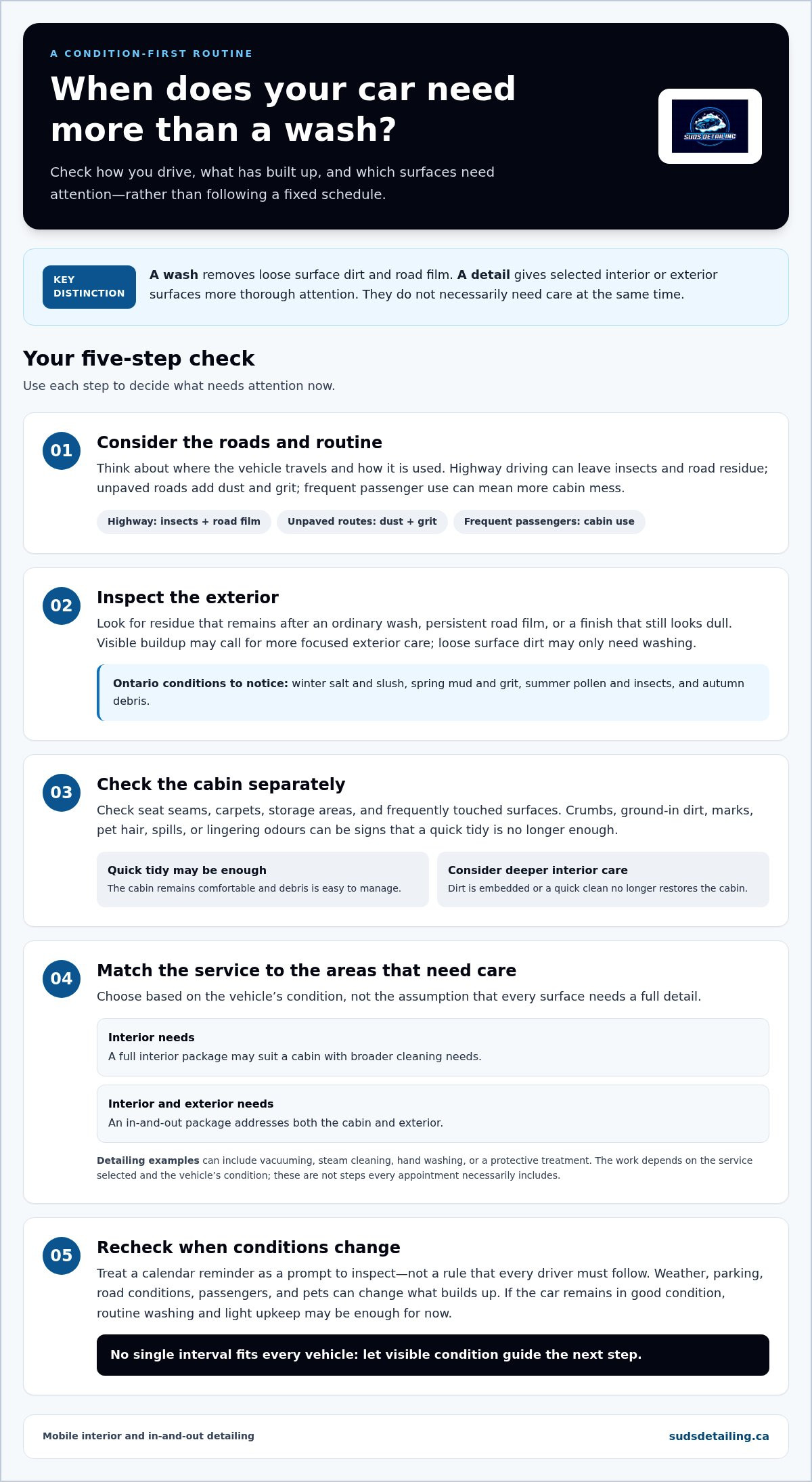
There’s no single detailing interval that suits every vehicle. A car parked indoors and driven occasionally won’t gather grime at the same rate as one used daily on busy roads. Start by separating routine washing from detailing, then assess the condition of the interior and exterior separately. That gives you a more useful answer to “how often should you detail your car?” than following a calendar without considering how you drive.
A wash removes surface dirt; a professional detail gives selected interior or exterior surfaces more thorough attention. Washing helps clear loose grime and road film. Detailing can address areas or buildup that a quick clean may leave behind, with the work depending on the vehicle’s needs and the service selected. For an overview of the process and how it differs from a standard car wash, see Auto detailing.
What counts as a car detail?
Interior and exterior care are related, but they don’t necessarily need attention at the same time. Inside, crumbs in seat seams, ground-in dirt on carpets, or marks on frequently touched surfaces can signal that a quick tidy isn’t enough. Outside, persistent road film or surfaces that still look dull after an ordinary wash may call for more focused cleaning. These are practical cues, not a reason to book every part of a detail automatically.
Detailing may involve steps such as vacuuming, steam cleaning, hand washing, or applying a protective treatment, depending on the service and the vehicle’s condition. These are examples, not a checklist that every appointment includes. A full interior package may suit a cabin with broader cleaning needs, while an in-and-out package addresses both the cabin and exterior. The useful question is which areas need more than routine upkeep.
Why a fixed detailing schedule can mislead
Mileage is only one part of the picture. A vehicle driven frequently may collect more dust and road film, but the type of route matters too. Highway travel can leave insects and road residue on exterior surfaces; town driving brings frequent stops and everyday cabin use; unpaved roads can add dust and grit. Outdoor parking also exposes a car to changing weather, while regular passengers or pets can mean crumbs, hair, and dirt accumulate sooner inside.
Use a calendar interval as a reminder to inspect your vehicle, not as a rule that every driver must follow. Between appointments, check the cabin and exterior separately. Are the carpets visibly soiled? Do marks or residue remain after a wash? Does the finish still look clean, and does the interior feel comfortable to use? If the car remains in good condition, routine washing and light upkeep may be enough for now. If buildup is becoming harder to manage, consider more thorough care for the areas that need it.
This condition-first approach keeps your schedule flexible. It also helps distinguish a vehicle that simply needs a wash from one that would benefit from a deeper interior or exterior clean.
What changes how often you should detail your car in Ontario?
Your car’s detailing needs reflect the roads it travels, where it’s parked, and what happens inside the cabin. In Ontario, conditions can shift from winter slush and road salt to spring mud, summer pollen, and autumn debris. Rather than booking by habit alone, use these changes as prompts to inspect the vehicle and decide which areas need attention.
Seasonal and road conditions around Dufferin County
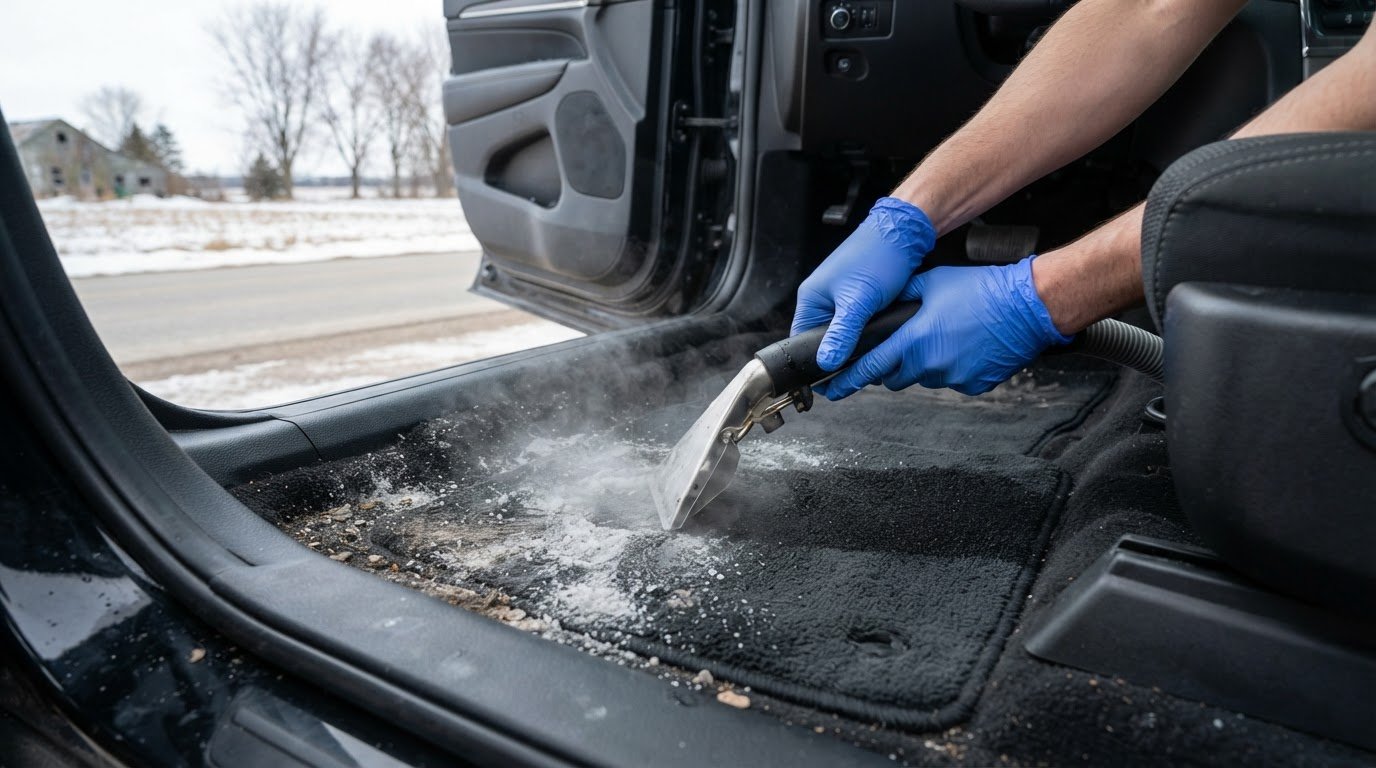
Winter driving can leave salt and slush on exterior surfaces, especially after repeated trips on wet, treated roads. Watch for visible residue and road film, and consider an earlier exterior clean if grime builds up between washes. After winter, mud and grit may linger on the vehicle, while spring debris makes a fresh check worthwhile. Unpaved roads around the region can also leave dust and gravel on the vehicle sooner than mostly paved routes.
Warmer weather brings its own changes. Pollen and tree debris can settle on the vehicle, while summer driving may leave insects or other road residue on the exterior. These conditions don’t automatically call for a full detail. They’re reasons to look closely, wash away surface dirt as needed, and consider more thorough exterior care if buildup remains.
How your parking and daily routine affect upkeep
A garage can reduce direct exposure to weather and falling debris, but it doesn’t keep a vehicle spotless. Outdoor parking may mean more contact with rain, pollen, mud, or tree debris. Neither situation sets a fixed detailing schedule; each changes what you’re likely to see when you inspect the car.
Daily commuting and occasional driving create different patterns, too. Frequent highway travel can bring road film and insects, while town trips may involve regular passenger use and stop-and-go errands. A car used occasionally may stay cleaner overall, but can still pick up dust or residue while parked. Pay attention to what accumulates, not only how far you’ve driven.
The cabin has its own set of clues. Children may leave crumbs or marks after family trips; pets can bring in hair and dirt; food and drinks can add spills or lingering odours. Work use may mean tools, equipment, or cargo repeatedly entering and leaving the vehicle. Check the seats, carpets, storage areas, and frequently touched surfaces. If debris is becoming embedded or a quick tidy no longer restores a comfortable cabin, more thorough interior care may be due.
Roads, weather, parking, and passengers shape detailing frequency by changing what builds up and where. Treat each seasonal change or shift in routine as a chance to reassess, not an automatic booking deadline. If your inspection points to a deeper clean, you can book mobile detailing with Suds Detailing at your preferred location in Dufferin County and nearby communities.
A practical car detailing schedule: match the service to the condition
A useful schedule has two parts: routine upkeep between appointments and a deeper clean when the vehicle’s condition calls for it. If you’re asking how often should you detail your car, use the guide below to assess what needs attention. These are check-in cues, not fixed booking intervals or guarantees. Bring care forward if grime builds up, or wait if regular washing and simple upkeep are keeping the vehicle in good shape.
Type of care | What to monitor | When to consider more attention
Routine upkeep | Surface dirt on exterior panels, windows, and the cabin | Keep up with washing and basic tidying while dirt remains easy to remove and the vehicle feels clean.
Interior attention | Crumbs, hair, dust, marks, or debris around seats and carpets | Consider an interior clean when mess persists after everyday tidying or the cabin no longer feels fresh and orderly.
More comprehensive detailing | Buildup across several interior or exterior areas | Consider a fuller service when routine cleaning no longer addresses the overall condition. A basic or full in-and-out package can address both areas; interior packages focus on the cabin.
Routine cleaning versus a professional detail
Between appointments, notice whether a normal wash and quick cabin tidy still make a meaningful difference. Surface cleaning can handle loose dirt and everyday mess, but persistent grime or buildup across multiple areas may call for more thorough attention. A dusty panel or stray crumb alone doesn’t mean it’s time to book a detail.
Professional mobile detailing is a separate step from routine upkeep. Suds Detailing’s interior and in-and-out packages provide options for a more thorough clean, with service choices suited to different areas of the vehicle. Choose a starting point based on whether the cabin, exterior, or both need attention.
Signs your vehicle may be ready for detailing
Assess the interior and exterior together, even if one looks more in need than the other. A single sign doesn’t prove that a particular service is necessary; consider how widespread the mess is and whether routine cleaning is still effective.
Crumbs, pet hair, or dirt remain in the cabin after ordinary tidying.
Carpets, seats, or frequently used surfaces show persistent marks or buildup.
Visible road grime or film remains after a routine exterior wash.
The cabin feels less fresh, or several areas look untidy at once.
Use these observations to adjust your plan rather than waiting for a particular date. If the car still responds well to routine care, continue with that approach and reassess later. If mess keeps returning or multiple surfaces need attention, a deeper clean may be a more practical next step.
How to adjust your car detailing routine through the seasons
Ontario’s seasons offer useful moments to reassess your car, but they don’t mean every vehicle needs a detail at the same point each year. Road salt and slush can leave visible residue during winter, while spring mud and debris may change what the exterior needs afterward. Let what you see, along with how you’ve been driving, guide whether to keep your usual routine or bring a deeper clean forward.
Winter salt, spring slush, and changing exterior needs
During winter, check the exterior when wet roads and slush leave noticeable salt or road film behind. A routine wash may be enough to address surface dirt, but persistent visible grime is a reason to reassess rather than wait for a planned appointment. As conditions ease, look again: spring mud and debris can reveal buildup that was less apparent in winter. These are prompts to inspect, not automatic booking triggers.
If you’re planning ahead for colder weather, Suds Detailing’s pre-winter car detailing guide offers seasonal context. Keep this check focused on your car’s current condition and whether its exterior needs more than routine upkeep.
A repeatable seasonal check-in
At a seasonal change, take a brief look at the same areas each time. This makes it easier to notice what has changed without assuming the whole vehicle needs attention just because the weather has shifted.
Check the exterior. Look for visible film, salt residue, mud, or spring debris. Consider whether ordinary washing is still addressing what you see.
Check the cabin. Notice whether the interior remains tidy or whether dirt, crumbs, or other everyday mess has built up since your last assessment.
Review your recent driving. Think about winter road exposure, unpaved routes, or a change in how often you’ve been using the car.
Consider changes in use. A new commute, outdoor parking, more passengers, or regular cargo can affect what collects inside and out.
Adjust the next appointment. If several signs point to more than routine upkeep, consider moving a deeper clean earlier. If the vehicle remains in good condition, continue with your existing routine and reassess later.
This simple check-in helps answer how often should you detail your car without turning each new season into a deadline. Focus on the combined picture: a little exterior residue alone may call for routine care, while persistent buildup alongside a messy cabin may make a more comprehensive service worthwhile.
When your seasonal check suggests the vehicle needs more thorough interior or exterior attention, book mobile detailing with Suds Detailing at your preferred location in Dufferin County and nearby communities.
When professional mobile detailing makes sense for your car
Professional mobile detailing can help when routine washing and tidying no longer address the vehicle’s overall condition. Persistent grime across the exterior, or a cabin that needs more than a quick tidy, may call for a more thorough service. You don’t need to wait for a particular month or mileage milestone. Let the condition of the areas you use and see most often guide your next step.
Choose a service based on what needs attention
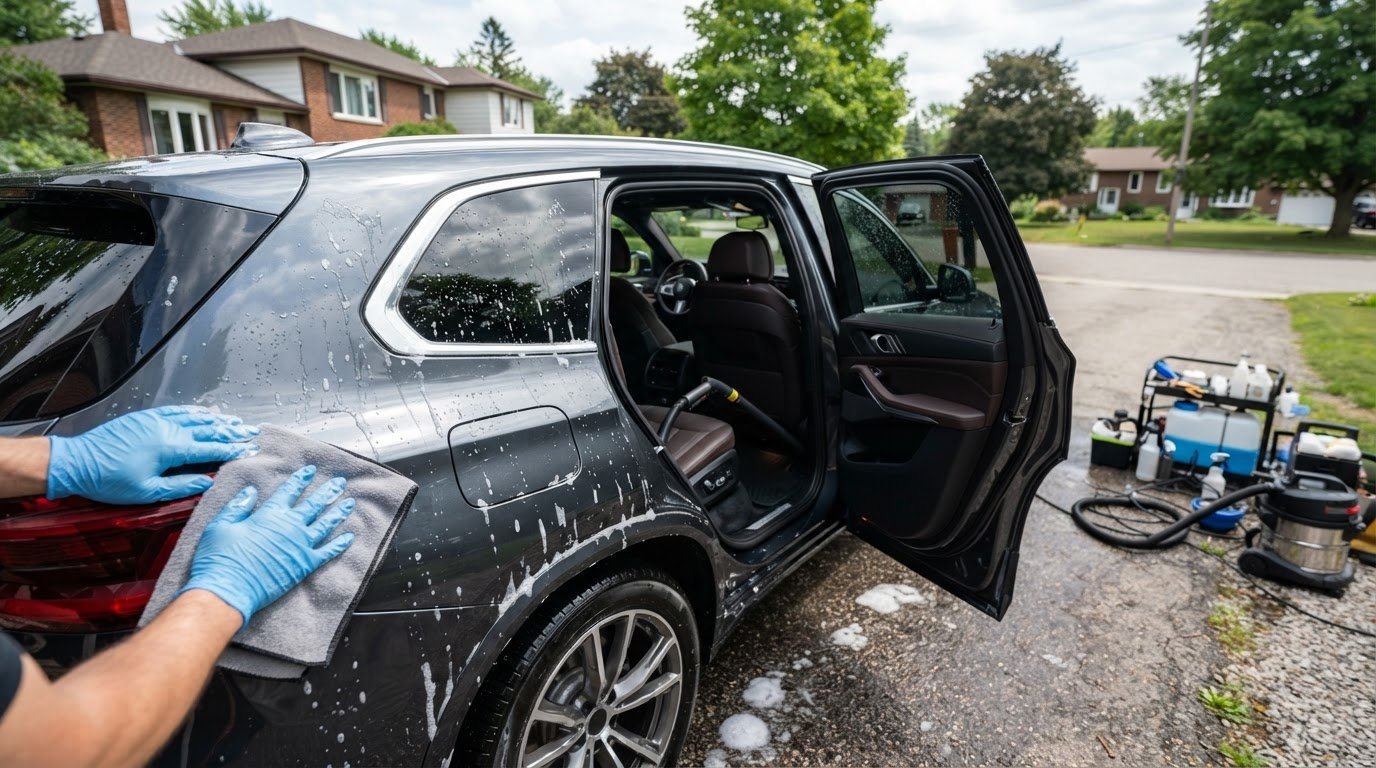
If the cabin needs broader attention, Suds Detailing offers a Basic Interior Package and a Full Interior Package. If both the interior and exterior need care, the Basic In & Out Package and Full In & Out Package offer combined options. Match the appointment to the areas that need work, rather than assuming every car needs the same package or booking cadence.
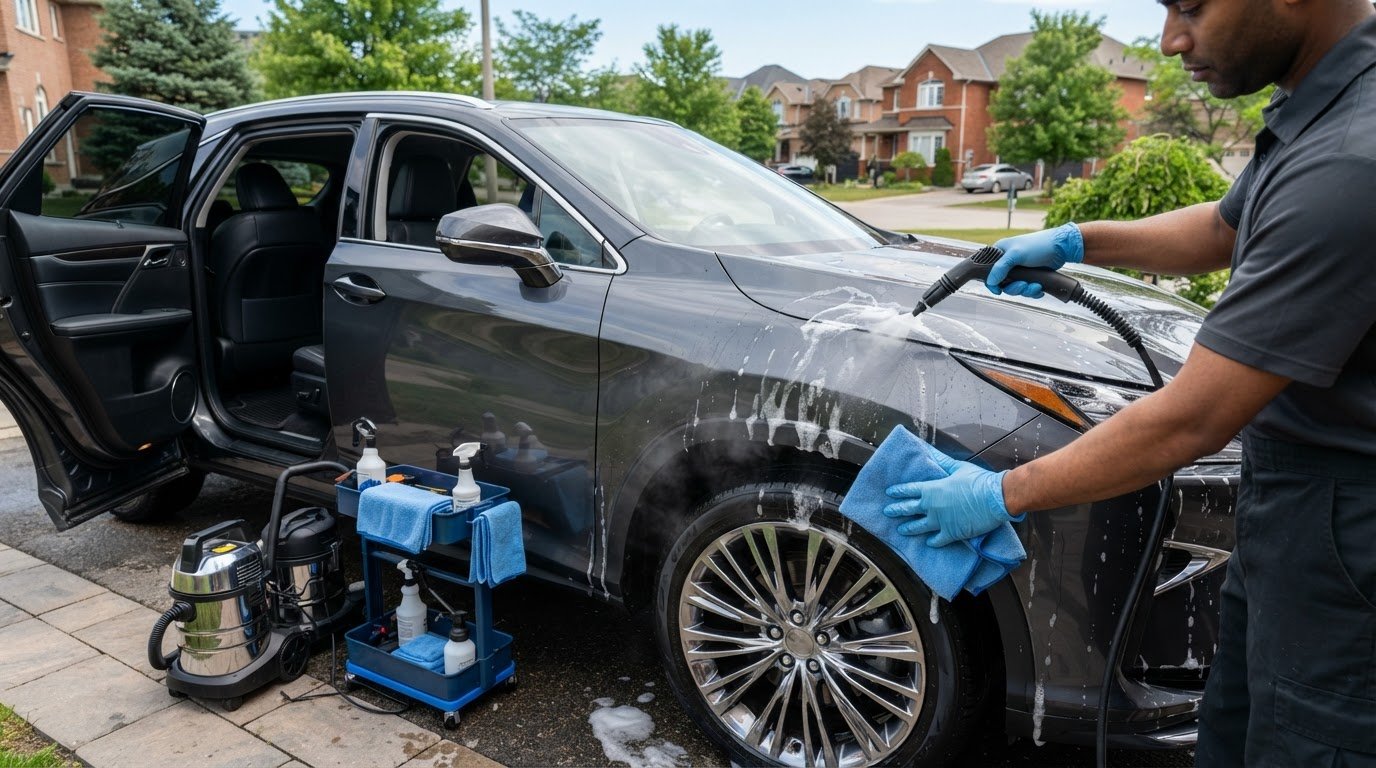
Services include options featuring steam cleaning, vacuuming, and hand washing. The right choice depends on your vehicle’s condition and the areas you want addressed. For example, if the exterior still looks clean but the cabin has accumulated persistent debris, an interior option may be the better fit. If visible exterior grime and cabin mess have built up together, consider an in-and-out option.
Before arranging service, note what you’re seeing: which areas need more than routine upkeep, and whether your concern is mainly inside, outside, or both. This gives you a practical basis for choosing between the available package types, without turning a single mark or patch of dirt into a reason to book a full detail.
Plan convenient mobile detailing in the Dufferin region
Mobile service makes a deeper clean easier to fit into your routine because Suds Detailing brings detailing to your preferred location. Suds Detailing serves Dufferin County and nearby communities, including Grand Valley, Caledon, Orangeville, Erin, Mono, Arthur, Shelburne, Guelph, Fergus, Georgetown, and Dundalk. For more context on mobile detailing across the region, see the Dufferin mobile detailing guide.
A condition-based check can help answer how often should you detail your car while keeping the decision grounded in what your vehicle actually needs. If routine care is no longer enough, choose the package type that fits the areas needing attention and arrange a visit at a convenient location.
Ready to plan a more thorough clean? Book mobile car detailing with Suds Detailing when your vehicle’s condition calls for it.
Make your next detailing decision with confidence
Set a reminder to take a fresh look at your vehicle after a major change in weather or routine. A quick check of the cabin and exterior can help you decide whether to keep up with ordinary washing or plan more thorough care. That simple habit makes “how often should you detail your car” a practical question you can answer based on what you see, not a rigid rule you have to follow.
If your next check suggests the vehicle needs more attention, choose care that suits the areas you want addressed. Suds Detailing brings mobile service to your preferred location in Dufferin County and nearby communities, with interior and in-and-out detailing options.
Book mobile car detailing at your preferred location when your vehicle needs more than routine upkeep.
Frequently Asked Questions
How often should you detail a car you drive every day?
For a daily driver, check the vehicle based on how quickly dirt and interior mess build up, rather than using mileage alone. After a week of commuting, for example, look for road film on lower exterior panels and check whether the driver’s footwell is collecting grit or salt. If ordinary upkeep no longer leaves these areas presentable, plan a detail sooner. Keep future checks tied to seasonal changes and passenger use.
Is detailing your car every month too often?
No, a monthly detail isn’t automatically necessary for every car. Separate a regular wash or quick interior tidy from a comprehensive service, then consider whether the vehicle has developed a broader cleaning need. If the cabin stays orderly and an ordinary wash takes care of exterior grime, there may be little reason to book a full service that month. Adjust your plan if heavy use, spills, or persistent dirt change that picture.
Can road salt affect how often you should detail your car?
Yes. Salt and slush are reasons to inspect your car’s exterior more closely, especially after repeated trips on treated roads. They don’t establish a set booking frequency, since exposure varies with routes and weather. Drivers around Grand Valley, Caledon, Orangeville, Erin, Mono, Arthur, Shelburne, Guelph, Fergus, Georgetown, and Dundalk can use visible buildup to judge whether routine washing is enough. For seasonal planning, see the pre-winter detailing guide.
How often should you detail a car with pets or children?
Let the cabin’s condition set the timing. A car used for school drop-offs, family outings, or regular trips with a pet may collect crumbs, hair, and dirt faster than one carrying passengers occasionally. Check areas that trap mess, such as seat seams, floor mats, and the space around child seats. If a quick tidy no longer leaves the cabin feeling clean, consider a more thorough interior service.
Does a car parked in a garage need detailing as often?
Not necessarily, but garage parking alone doesn’t determine the schedule. A covered vehicle may collect less outdoor debris, yet it can still bring in dirt from regular trips or gather crumbs and dust inside. Consider how often you drive, who rides with you, and whether the car is used to carry equipment or groceries. A garage can change the kind of buildup you notice, not remove the need to assess condition.
What is the difference between a car wash and a car detail?
A car wash generally focuses on routine surface cleaning, while detailing gives more thorough attention to the interior, exterior, or both. For example, a wash may remove loose dirt from the outside, while a detail may address broader cabin or surface cleaning needs. The exact work depends on the service selected. If you’re booking, review the package description so you understand which areas of the vehicle it covers.
Should you detail a car before selling it?
A thorough clean can help your car look neat and cared for when you show it to potential buyers. Consider the areas that are most noticeable during a viewing, such as the seats, carpets, windows, and exterior surfaces. Choose interior or in-and-out care according to what needs attention and how soon you plan to sell. Detailing can improve presentation, but it can’t guarantee a higher sale price or replace necessary repairs.
Comments