Health and Safety for Vehicle Cleaning in Mono

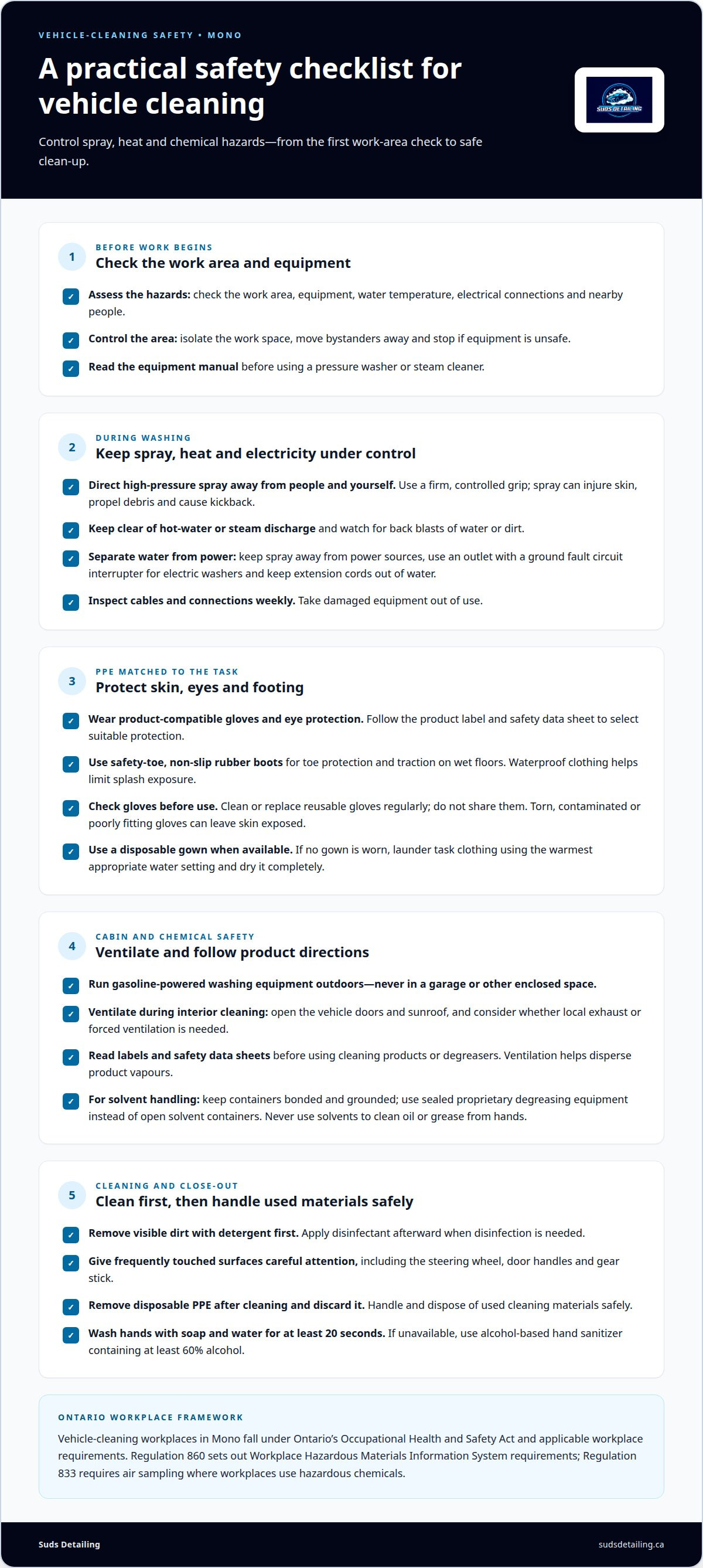
A clean vehicle should never come at the cost of a preventable injury. Health and safety for vehicle cleaning in Mono starts with controlling spray, heat and chemical hazards: professionals keep high-pressure equipment away from people and electrical sources, wear suitable gloves, eye protection and waterproof footwear, and ventilate the cabin while cleaning. They also follow product instructions, clean and sanitize frequently touched surfaces, and dispose of used materials safely.
It’s easy to focus on the finished shine, but careful methods matter throughout the cleaning process. Protective equipment and appropriate cleaning products help reduce exposure to splashes, vapours and other washing hazards. Knowing which vehicle surfaces need attention and how to handle used materials also helps you understand what a thorough, safety-conscious professional service involves.
Table of Contents
Hot water and high-velocity spray hazards
In Mono, vehicle-cleaning workplaces fall under Ontario’s Occupational Health and Safety Act and applicable workplace requirements. Ontario Regulation 860 sets out Workplace Hazardous Materials Information System requirements, while Regulation 833 requires air sampling where workplaces use hazardous chemicals. These rules sit alongside practical controls for spray, heat, electrical equipment and cleaning products.
Hazard assessment means identifying existing and potential dangers before work begins. Before washing a vehicle, workers should assess the work area, equipment, water temperature, electrical connections and nearby people. This can reveal a wet floor, damaged cable or confined space before cleaning starts. Controls should match the hazard: isolate the area, move bystanders away and stop work if equipment is unsafe.
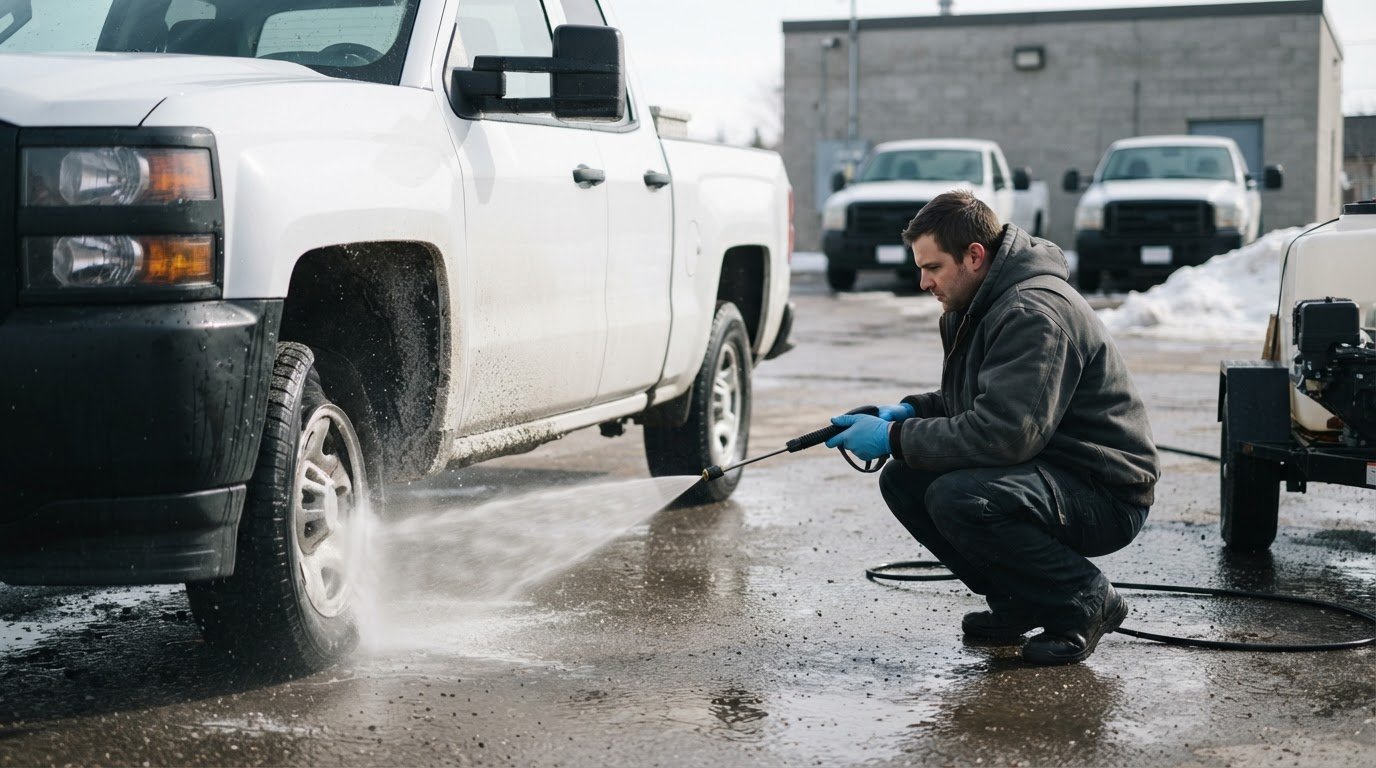
High-velocity spray is a forceful stream from a pressure washer that can injure skin or propel dirt and debris. Operators should never direct the spray at another person or themselves. A spray gun can also kick back, so a firm, controlled grip matters. Eye protection helps guard against debris, while waterproof clothing and boots reduce exposure to splashes. Workers should read the equipment manual before using a pressure washer or steam cleaner.
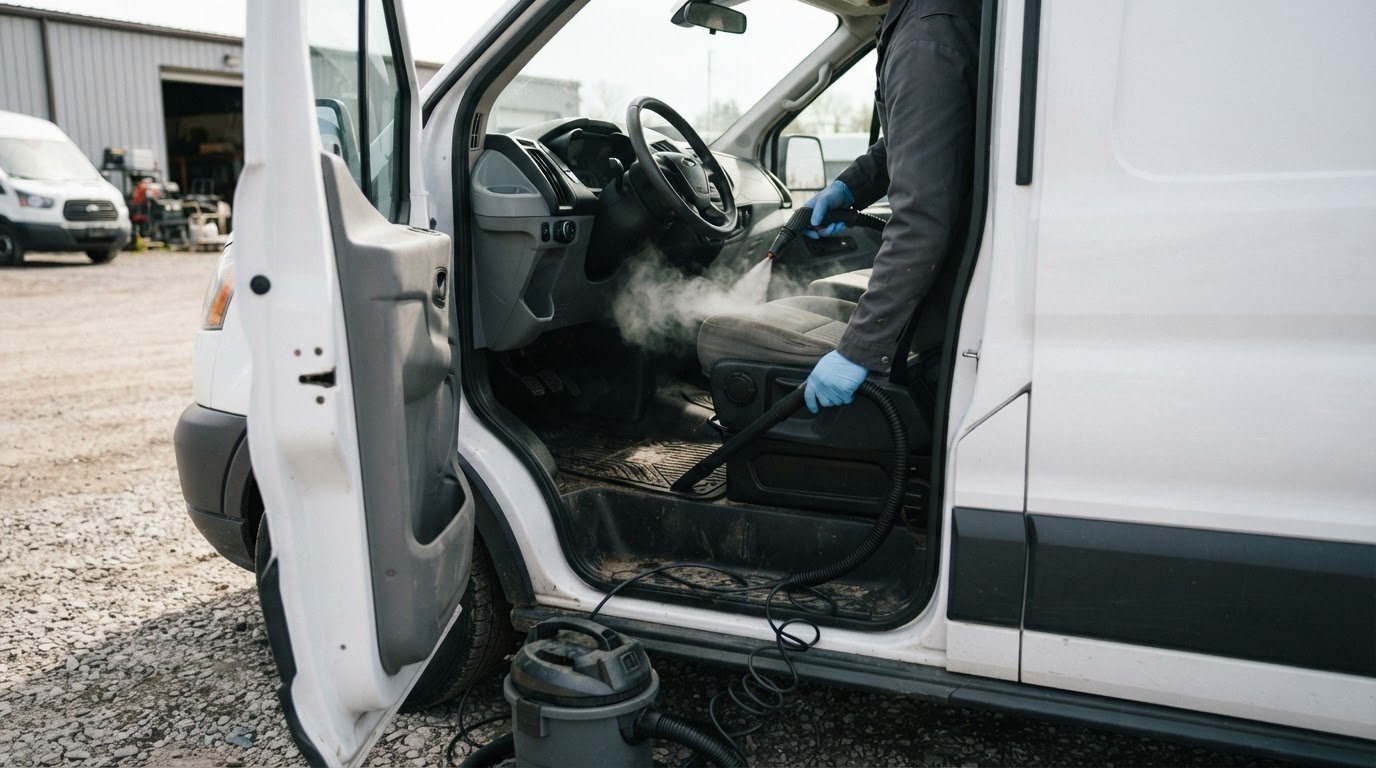
Hot-water exposure is the risk of burns from heated water or steam during washing. Employees should avoid contact with the discharge and watch for back blasts of water or dirt. Keep the spray away from power sources, where water and electricity can create an electric-shock hazard. For electric washers, use an outlet with a ground fault circuit interrupter; keep extension cords out of water. Visually inspect cables and connections weekly, and take damaged equipment out of use.
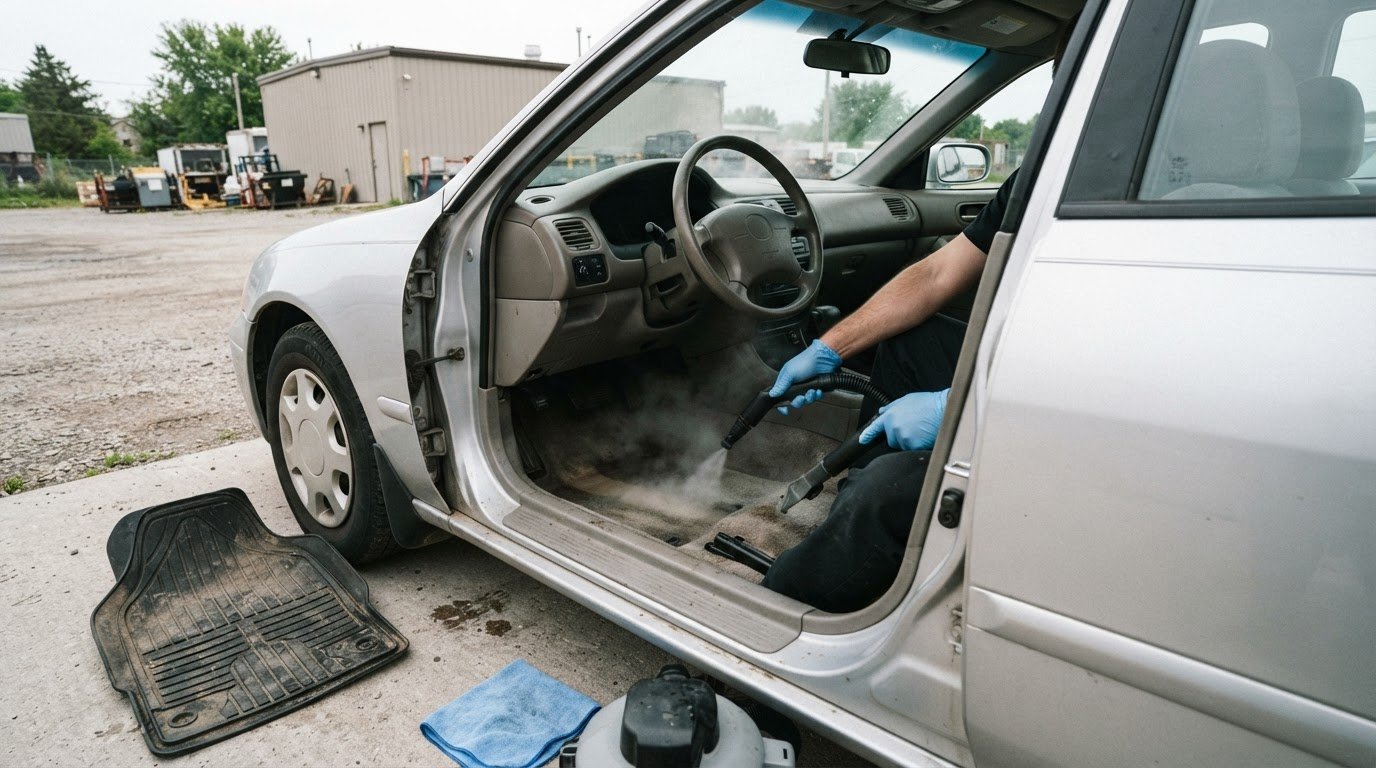
Carbon monoxide exposure can occur when gasoline-powered washing equipment runs in an enclosed space or building. Use that equipment outdoors, never inside a garage or other enclosed area. For interior cleaning, open the vehicle doors and sunroof, then consider whether local exhaust or forced ventilation is needed. Ventilation also helps disperse cleaning-product vapours.
Flammable-liquid hazards include vapours that may ignite and static electricity during solvent handling. Some vehicle-cleaning and degreasing products release flammable vapours, so read product labels and safety data sheets before use. Keep solvent containers properly bonded and grounded, and use sealed proprietary equipment for degreasing instead of open solvent containers. Never use solvents to remove oil or grease from hands; wash with soap and water or use a waterless cleanser. If solvent soaks clothing, remove it immediately and wash the skin thoroughly.
Personal protective equipment for vehicle washing
A Town of Mono permit or business licence is separate from worker protective equipment. PPE rules do not establish whether municipal approval is needed for vehicle washing or detailing, and they do not replace applicable local requirements.
Personal protective equipment (PPE) means clothing and equipment worn to reduce exposure to workplace hazards. For vehicle washing, the right combination depends on the products and methods used. Pressure washing may call for waterproof clothing, while chemical handling can require product-compatible gloves and eye protection. Workers should use the protective equipment specified by each product’s manufacturer, rather than assuming one set of gear suits every cleaning task.
Safety-toe, non-slip rubber boots protect toes and help maintain traction on wet floors. During washing, standing water and detergent can make work areas slippery. Boots with non-slip soles help reduce slipping, while the safety-toe design adds protection around equipment and tools. Waterproof clothing can also limit skin and clothing exposure to splashes from washing or steam cleaning.
Product-compatible gloves are selected to withstand the cleaners or degreasers being handled. Disposable gloves may suit a single cleaning task, but the product label and safety data sheet should guide glove selection. Solvent handling may require suitable gloves that protect the hands and forearms, plus eye protection against splashes. Clean or replace reusable gloves regularly, and never share them between workers. A torn, contaminated or poorly fitting glove can leave skin exposed.
A disposable gown is a single-use protective layer worn over clothing during cleaning and disinfection. Wearing one is recommended when available. If no gown is worn, launder task clothing afterward using the warmest appropriate water setting, then dry it completely. This helps prevent cleaning residues from remaining on clothing worn outside the work area.
Safe removal and handwashing means taking off protective equipment without transferring residue to skin. Remove disposable PPE after cleaning and discard it. Then wash hands with soap and water for at least 20 seconds, as recommended by the Centers for Disease Control and Prevention. Wash before eating or touching the face, and after handling used gloves or clothing. If soap and water aren’t available, use an alcohol-based hand sanitizer containing at least 60% alcohol. These steps enhance protection by addressing contamination that gloves alone can’t prevent.
Cleaning and disinfecting solutions for vehicles
For organizations maintaining work vehicles, Fleet Services are the relevant cleaning option. A safety-focused service should explain how workers select products, follow instructions, ventilate cabins and treat contact surfaces. The cleaning method matters as much as the product: detergent removes soil, while disinfectant is applied afterward when disinfection is needed.
Detergent cleaning removes visible dirt and residue from a surface using soap or detergent and water. On hard, non-porous vehicle surfaces, clean visible soil before applying disinfectant. Dirt left beneath disinfectant can interfere with contact between the product and the surface. For example, clean a visibly soiled door handle before disinfecting it.
Disinfection uses a product to reduce germs on a suitable surface. Apply it only after cleaning, and follow the manufacturer’s instructions for concentration, application method and contact time. Contact time is how long the surface must remain wet with the product. Rinsing or wiping too soon can interrupt the labelled process, so follow the product directions.
Product labels and safety data sheets explain safe use, hazards and handling requirements for cleaners and degreasers. Before use, workers should read both documents and understand the required dilution, protective measures and disposal directions. Safety data sheets can also help compare products and select a suitable option with fewer hazards. Some cleaning or degreasing substances can irritate skin, cause narcotic effects or release flammable vapours, making informed selection important.
Ventilation is the movement of fresh air through the work area to disperse mist or vapour. Concentrated products may be used inside vehicle cabins, so keep doors and windows open during cleaning and disinfection. Assess whether local exhaust or forced ventilation is needed for the task. Detergents added to pressure-washing lances are generally low risk, but workers still need to follow product instructions.
Alcohol-based disinfectant is a solution used on appropriate hard, non-porous surfaces. For those vehicle surfaces, use an alcohol solution containing at least 70% alcohol. For frequently touched electronics, remove visible dirt and follow the manufacturer’s instructions; if guidance is unavailable, wipes or sprays with at least 70% alcohol may be considered. Avoid applying a product that could damage the finish or components.
Surface-specific cleaning means matching the method and product to the material. For soft or porous upholstery, remove visible contamination, clean with a suitable product, then use a product intended for porous surfaces. Household bleach must never be mixed with ammonia or another cleanser. If a bleach solution is appropriate, follow its label, check that it hasn’t expired and confirm that it suits the vehicle surface.
Cleaning high-traffic and contact areas
High-traffic contact areas are vehicle surfaces people touch repeatedly while entering, driving or riding. A focused cleaning plan identifies these spots before work begins, rather than treating every cabin surface alike. In a car, priority areas include the steering wheel, door handles, dashboard, gear stick, hand brake, and radio or display. Regular use makes careful, consistent attention essential.
A contact-area checklist is a task list that helps ensure commonly touched surfaces aren’t overlooked. For a professional vehicle clean, it can follow the driver’s path: door handle, steering wheel, gear stick, hand brake, then radio or display. Include the dashboard and passenger door handles, too. A checklist is especially useful for fleet vehicles, where different drivers may use the same controls throughout a working day.
Cleaning frequency is how often contact surfaces receive cleaning and disinfection. Commonly touched vehicle surfaces should be cleaned and disinfected at the beginning and end of each shift, and between transporting passengers who are visibly sick. For a work vehicle, build this timing into shift handovers. The focus is the same each time: the steering wheel, handles, controls and other surfaces touched during use.
Electronic-surface care means cleaning vehicle displays and controls according to the manufacturer’s instructions. Radio buttons, touchscreens and display surrounds can collect fingerprints, but need careful handling. First remove visible dirt, then follow the manufacturer’s directions for cleaning and disinfection. A product applied carelessly to a screen or control may affect the surface, so use an appropriate method and avoid letting liquid pool around buttons or edges.
Clean-to-dirty workflow is an organized approach that limits transferring soil between cabin areas. A professional can follow the contact-area checklist systematically, focusing on one surface before moving to the next. For example, treat the steering wheel and gear stick as separate touchpoints rather than rushing over both with the same cloth and attention. The checklist also helps distinguish frequently handled controls from less-used trim.
Final inspection is a last review to confirm that identified touchpoints received attention. Revisit the steering wheel, all door handles, dashboard controls, gear stick, hand brake and radio or display. In a passenger vehicle, also account for surfaces passengers can reach. This deliberate review helps ensure a missed handle or control doesn’t undermine an otherwise thorough cabin clean.
Disposal of single-use PPE and cleaning materials
Single-use PPE is protective equipment intended for one cleaning task, such as disposable gloves. After vehicle cleaning, remove and discard disposable protective equipment. The vehicle-cleaning checklist recommends double-bagging single-use PPE, disposable cloths and covers before placing them in general waste. Keep used items contained during handling so residue doesn’t transfer to clean equipment or nearby surfaces.
Disposable cleaning materials include used cloths and covers that won’t be reused after a vehicle clean. Double-bag these items with single-use PPE, following the checklist’s disposal method. Don’t leave used cloths beside fresh supplies or on vehicle seats. Keeping waste together and contained makes final cleanup orderly and reduces the chance of spreading soil or product residue.
Reusable cleaning materials are items kept for another task rather than discarded after one use. Separate reusable tools from disposable waste at the end of the job. Handle laundry from vehicle cleaning carefully, then wash hands after handling it. If clothing was worn during cleaning and disinfection without a disposable gown, launder it using the warmest appropriate water setting and dry it completely.
Chemical waste includes leftover cleaning products and materials contaminated by them. In Mono, dispose of chemicals, materials and waste from garage cleaning according to local environmental laws. Vehicle wash water and wastewater also need responsible handling under applicable local environmental requirements. The appropriate approach depends on the waste and cleaning process, so don’t treat chemical residue as ordinary disposable PPE.
Oil-contaminated absorbent is material used to collect oil remaining on a garage floor. After scraping or shovelling away oil, absorb the residue with non-combustible absorbent material. Keep it separate from clean cloths and other uncontaminated waste. The same distinction applies to used cleaning supplies: waste with oil or chemical residue needs appropriate handling, not casual mixing with clean reusable equipment.
Garage-floor wash water is water used to clean and rinse a work area after oil removal. The recommended floor-cleaning sequence uses an industrial, non-volatile, biodegradable detergent solution, followed by a clean-water rinse. Plan disposal as part of the process, rather than letting wastewater flow wherever it leaves the floor. Local environmental laws govern disposal of garage-cleaning chemicals, materials and waste.
A disposal check is a final review that confirms waste has been separated and contained. Before leaving the work area, confirm that disposable PPE, cloths and covers are double-bagged, reusable items are kept apart, and oil- or chemical-contaminated material is handled separately. This closing step helps prevent waste from being mistaken for clean supplies during the next vehicle-cleaning task.
Suds Detailing
Suds Detailing provides mobile detailing for drivers and fleet operators in Mono and nearby communities, including Grand Valley, Caledon, Orangeville, Erin, Mono, Arthur, Shelburne, Guelph, Fergus, Georgetown and Dundalk. The Basic Interior and Full Interior Packages focus on cabin care, while the Basic In & Out and Full In & Out Packages combine interior and exterior detailing. Fleet Services support businesses maintaining work vehicles. Choose based on whether you need interior care, both interior and exterior detailing, or regular fleet service.
Choose a careful next step for your vehicle
Prioritizing health and safety for vehicle cleaning in Mono means considering not only how a vehicle looks, but how its care is handled. If you’re arranging cleaning for a personal vehicle or work fleet, choose an option that fits the vehicle’s needs and the attention required. Suds Detailing offers the Basic Interior Package for cabin care, the Full In & Out Package for interior and exterior detailing, and Fleet Services for business vehicles.
Mobile detailing brings the service to your driveway, so you can arrange care without taking the vehicle elsewhere. Share whether the priority is the interior, a full in-and-out clean or fleet care to choose a suitable Suds Detailing service.
Contact Suds Detailing to discuss your vehicle cleaning needs and take the next step with confidence.
Frequently Asked Questions
What safety practices should you expect from a professional vehicle cleaning service?
A safety-conscious cleaning process plans the work area, matches precautions to the method and keeps equipment in safe condition. Workers should keep spray away from people and electrical sources, ventilate the vehicle cabin and separate used materials from clean supplies. For health and safety during vehicle cleaning in Mono, the process should also include a final review of the work area, wet floors and leftover product.
What should you look for in a professional vehicle-cleaning checklist?
A useful checklist identifies the vehicle, cleaning tasks, products and equipment involved, then records whether each task is complete. It can cover cabin surfaces, product contact times, ventilation, waste separation and a final area check. For fleet vehicles, a consistent checklist helps workers follow the same process across vehicles and shifts. Clear, actionable steps are more useful than broad reminders such as “clean thoroughly.”
How do professional vehicle cleaners handle chemicals and safety data sheets in Ontario?
Professional cleaners should read product labels and safety data sheets before using cleaners or degreasers. In Ontario, Ontario Regulation 860 sets out workplace requirements for the Workplace Hazardous Materials Information System. Regulation 833 requires air sampling in workplaces using hazardous chemicals to check worker exposure against occupational exposure limits. Product documents help workers understand handling, protective equipment and ventilation needs, while product selection should consider the least harmful suitable option for the task.
What personal protective equipment should professional vehicle cleaners use?
PPE should suit the task and product, rather than follow a single standard outfit for every vehicle. Gloves must be compatible with cleaning products; eye protection can guard against splashes and debris. Washing work may call for safety-toe, non-slip rubber boots and waterproof clothing. A disposable gown can add a protective layer during cleaning and disinfection. After removing PPE, workers should wash their hands before handling clean supplies or touching their face.
How do professional vehicle cleaners prevent slips, trips, chemical exposure, and ergonomic injuries?
Workers can reduce these risks by organizing the work area before cleaning and keeping walking paths clear of hoses, cords and supplies. Manage wet floors promptly, and position equipment to avoid unnecessary reaching or twisting around a vehicle. To limit chemical exposure, follow product directions, use appropriate PPE and ventilate the cabin. A measured pace and deliberate repositioning can help avoid awkward movements during detailed interior work.
What fire and ventilation precautions should a professional vehicle cleaner take when using solvents or pressure washers?
Solvent vapours can be flammable, so workers should follow product directions, keep solvent containers properly bonded and grounded, and avoid ignition sources. Gasoline-powered pressure-washing equipment should never run inside a building or enclosed space because carbon monoxide can accumulate. For interior cleaning, keep doors and windows open, and consider local exhaust or forced ventilation when needed. Electric pressure washers should use an outlet with a ground fault circuit interrupter.
What safe operating procedures should professional vehicle cleaners follow for pressure washers, lifts, and cleaning equipment?
Workers should read equipment manuals before use, inspect equipment and connections, and remove damaged tools from service. Pressure washer operators should control spray direction, anticipate gun kickback and keep water away from electrical sources. A health-and-safety approach to vehicle cleaning in Mono also means following lift manufacturers’ instructions, using designated safety controls and keeping people clear of moving parts. Workers shouldn’t bypass guards or safety features to speed up a task.
Comments