How Often Should You Detail Your Car? Set a Schedule

A practical starting point is to have your car detailed every 4 to 6 months, then adjust the schedule to how you drive and where you park. Daily use, gravel roads, outdoor parking, and winter road salt can mean your vehicle needs attention sooner; a lightly used, garage-kept car may stay in good shape longer. The right interval depends on what your car faces between details.
It’s reasonable to wonder whether your car’s interior and exterior need the same care. They don’t always: road grime and salt affect the outside, while kids, pets, spills, and everyday use can make the cabin need attention sooner.
This guide explains how driving habits, parking, Canadian weather, and the condition of your interior and exterior can shape your detailing schedule. You’ll also learn the signs that it may be time to book before your next routine detail, and how professional care can help maintain a clean, well-kept vehicle.
Table of Contents
1. How driving habits and parking affect detailing frequency
Drivers often ask, “How often should I get my car detailed?” A practical starting point is every 4 to 6 months, then adjust for driving, parking, and seasonal exposure. A vehicle used daily on gravel and left outdoors collects dust and debris faster than a weekend car kept in a garage. That difference can bring the next detail forward.
Daily driving and long-distance commuting expose the exterior to more road grime, while gravel routes add dust and loose debris. For cars facing harsh conditions or frequent use, detailing every 3 to 4 months can make sense. Rideshare and business vehicles are generally suited to a 2 to 3 month schedule, because passengers and repeated trips add wear to the interior as well as the exterior.
Parking affects what settles on your car’s paint. A vehicle left outside faces more sun, moisture, tree sap, and bird droppings than one stored in a garage. Outdoor parking can make quarterly detailing useful, while a lightly used, garage-kept car may need attention only twice a year. If you mostly drive on weekends, twice-yearly detailing can be reasonable when you keep up with routine cleaning between appointments.
Road and seasonal conditions matter, too. Winter driving in Ontario can leave salt and slush on the exterior, in wheel wells, and on carpets. If your vehicle regularly faces snow, road salt, or rough conditions, a detail every 2 to 3 months can help address that heavier exposure. Frequent gravel-road driving also calls for closer attention, since dust and debris can settle inside and out.
Off-road and heavy-duty vehicles may need detailing monthly to bi-monthly, depending on how much mud, dust, or debris they encounter. By contrast, the 4-to-6-month starting interval may suit typical driving and parking conditions. Reassess after a demanding season or a change in routine, such as a longer commute or switching from garage parking to an outdoor space.
A ceramic coating can change the exterior schedule: coated vehicles can often be detailed twice a year, with gentle maintenance washes every two weeks. Ceramic coating itself is recommended for Ontario vehicles every 2 to 5 years. It doesn’t eliminate routine care; road film and winter grime still need attention. Detailing too often can mean unnecessary handling, while harsh products or abrasive techniques can dull surfaces or leave scratches.
So, how often should I get my car detailed if my routine changes? Reassess when you start commuting farther, park outdoors, or notice grime returning sooner. Use the condition of the interior and exterior, along with seasonal exposure, to choose when to book next. This keeps your schedule grounded in how you actually drive and store the vehicle.
2. Exterior versus interior detailing schedules
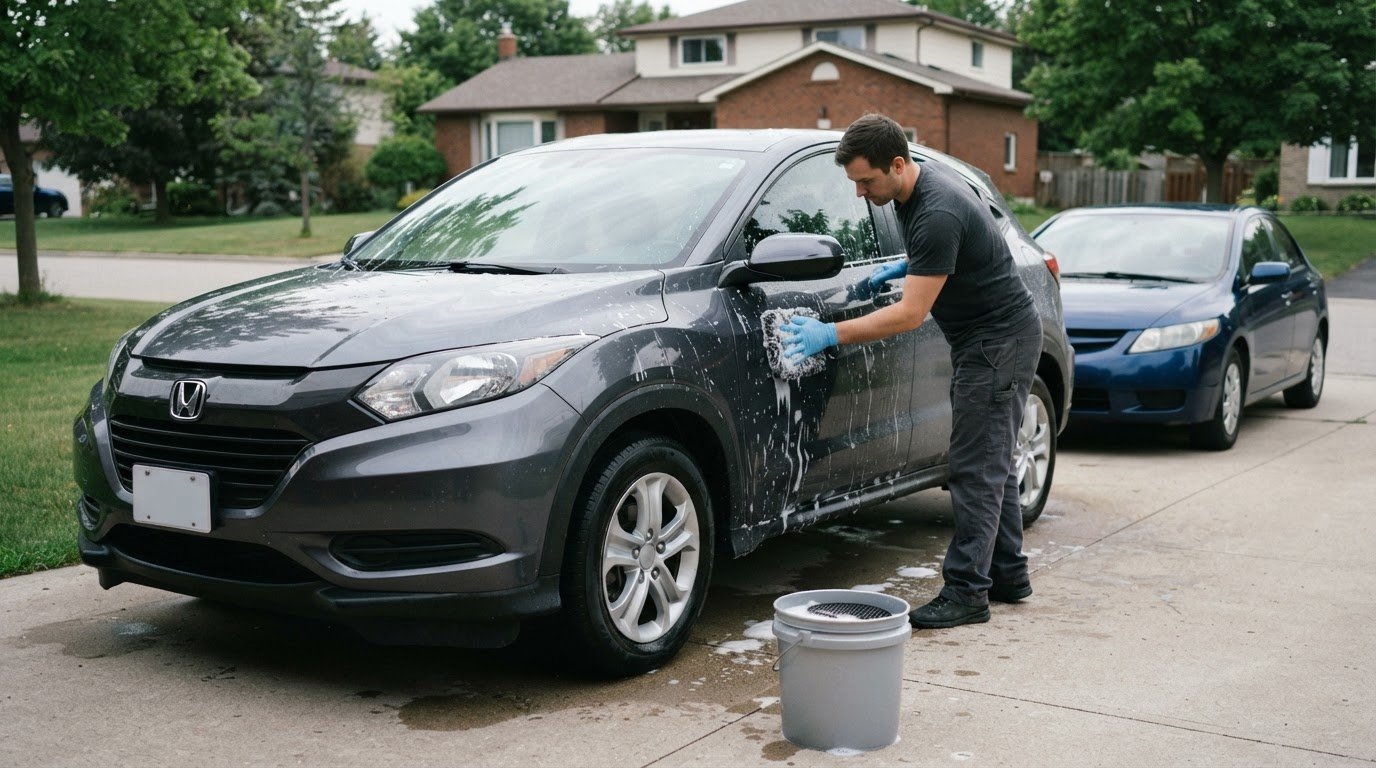
Your car’s exterior and interior don’t necessarily need a full detail on the same schedule. Exterior washing removes everyday road film, while detailing addresses more accumulated grime and surface contamination. For Ontario drivers, exterior washing every 4 to 8 weeks helps manage regular exposure. A more thorough exterior detail is generally recommended every 3 to 6 months, depending on driving and parking conditions.
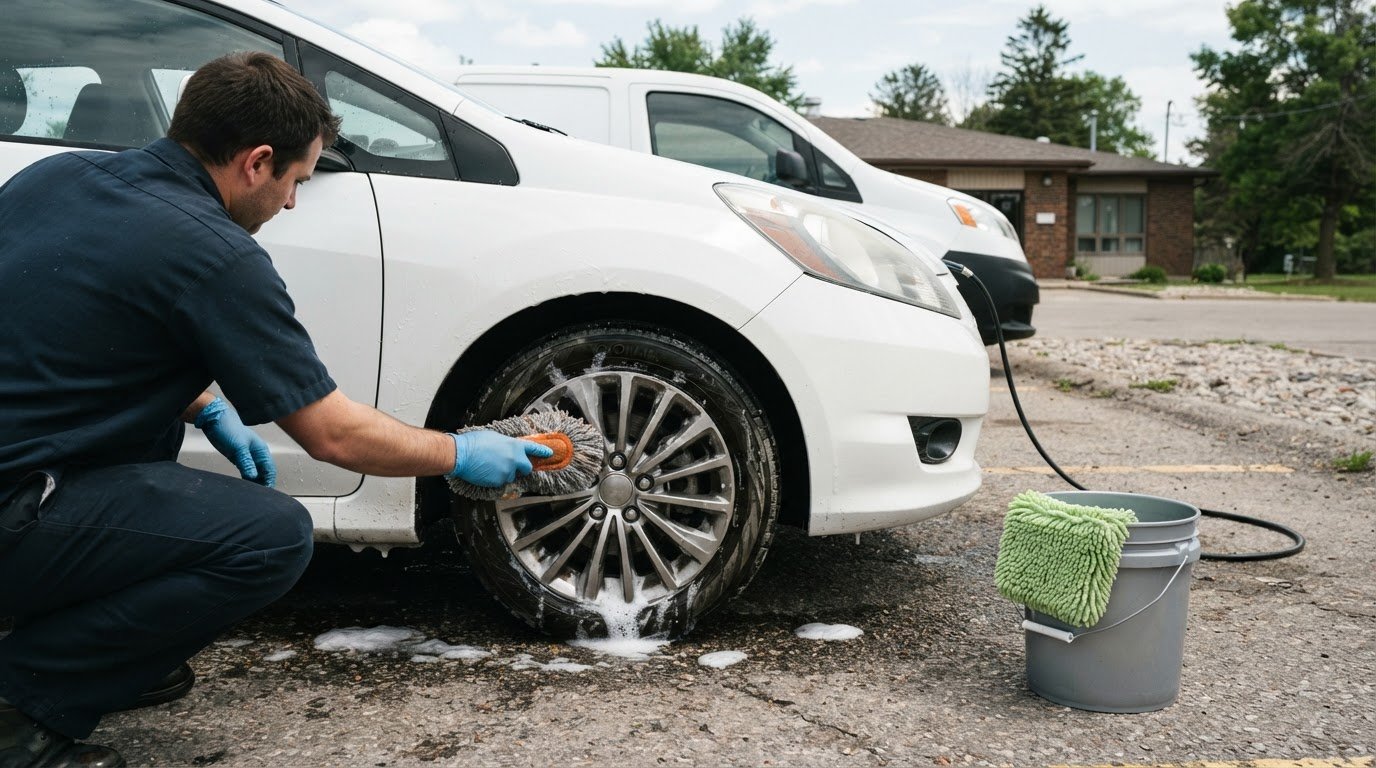
Between professional appointments, regular washing helps remove dirt before it builds up on paint and trim. Winter brings another challenge: salt and slush can cling to exterior surfaces and get tracked into the cabin. A spring detail can help address winter residue on the paint and carpets. If the finish feels rough or water no longer beads after washing, consider exterior care sooner.
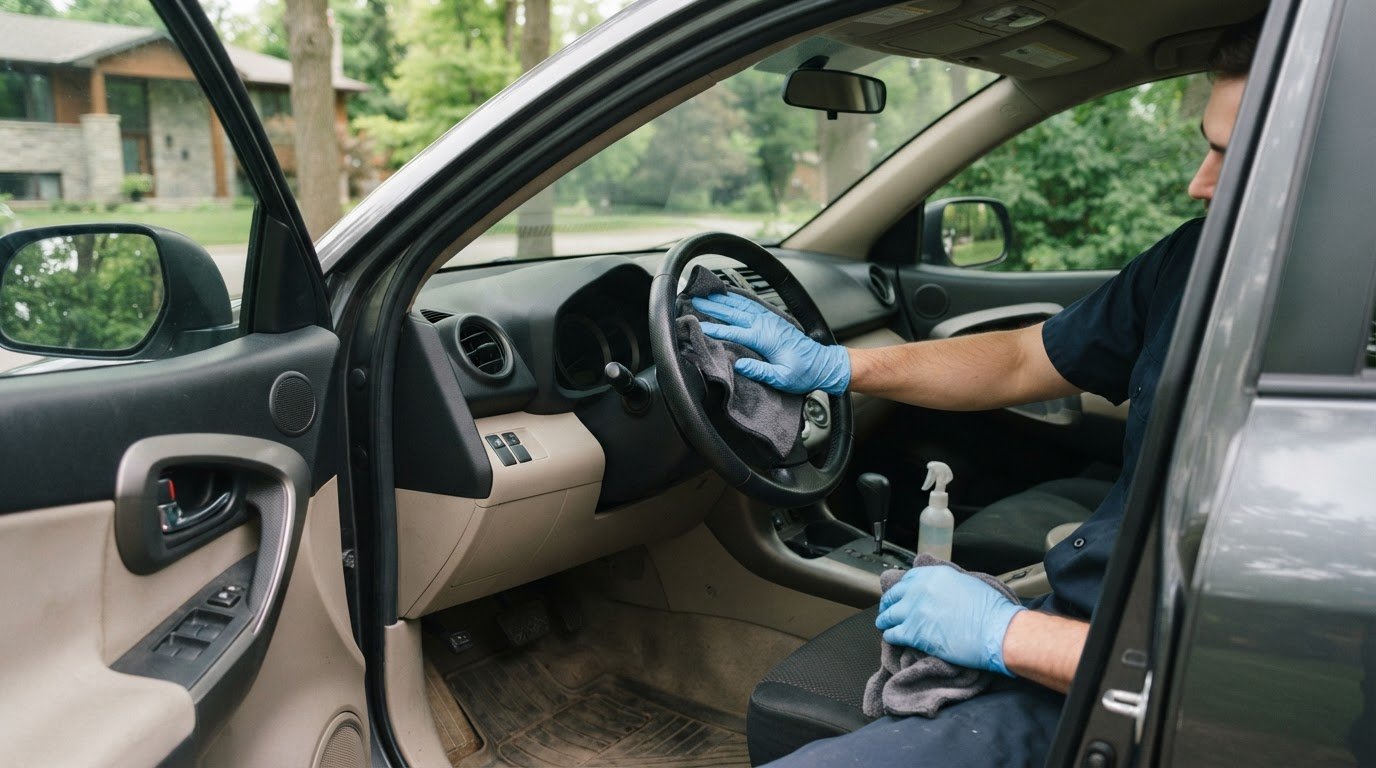
The interior schedule depends more on passengers and daily use. Interior detailing is generally recommended every 3 to 6 months, or seasonally, with routine cleaning between appointments. A quiet commuter’s cabin may stay presentable longer than a family vehicle carrying children, pets, or outdoor equipment. Crumbs in seat seams, muddy floor mats, and fur on upholstery are practical signs that the interior needs attention.
For a family car with children or pets, interior detailing every 3 to 4 months can help keep up with heavier use. Spills, food residue, and tracked-in dirt can settle into upholstery and carpets, so clean fresh messes promptly rather than waiting for the next full detail. Deep shampooing, leather conditioning, and vent cleaning twice a year can form part of a seasonal routine. Leather seats may need conditioning every few months to help prevent cracking.
Set separate schedules for the surfaces that need attention. If the cabin is tidy but the exterior has winter grime, focus on the outside; if the paint is clean but spills have accumulated inside, prioritize the interior. A comprehensive professional detail every six months can work alongside regular washing and basic cabin cleaning between visits. This responsive approach avoids treating every surface as if it gets dirty at the same rate.
A ceramic coating can change the exterior maintenance routine: coated vehicles can often receive exterior detailing twice a year, while still needing gentle maintenance washing every two weeks. A coating doesn’t remove the need to clean road film, salt, or bird droppings. For interior upkeep, book professional detailing when routine cleaning no longer handles built-up dirt, odours, or stains.
3. Benefits of professional detailing
Professional auto detailing provides a more thorough clean than routine washing and vacuuming. It can help protect exterior paint and interior finishes, remove stains and odours, and support resale value. These benefits matter most when dirt has settled into carpets, grime clings to the paint, or everyday cleaning no longer freshens the cabin.
A careful detail addresses several surfaces as part of one process. Hand washing removes surface dirt from the exterior, while vacuuming lifts crumbs and debris from carpets and seat gaps. Steam cleaning helps address interior buildup. For example, after winter, a family car may need attention to both salt-stained mats and fingerprints on interior surfaces.
Regular detailing also helps tackle mess before it becomes harder to remove. Coffee spills, muddy footprints, and pet hair can affect the cabin’s appearance and feel. Routine cleaning helps, but professional service offers a more thorough approach to stains and odours across carpets and upholstery.
Is professional car detailing worth it compared with DIY detailing? DIY washing and vacuuming work well for regular upkeep, especially when the car has light dirt and no stubborn stains. A professional detail is worthwhile when grime, odours, or embedded debris need more comprehensive attention, or when you want the interior and exterior cared for in one appointment.
The value lies in the process as well as the result. Professional detailing gives focused attention to areas often missed in a quick clean, such as seat seams, floor mats, and door interiors. In a work vehicle used throughout the week, repeated entry can leave dirt on mats while dust gathers on surfaces. Consistent care helps keep the cabin comfortable and presentable.
Exterior care is useful after exposure to weather, road grime, and seasonal residue. Washing removes loose dirt, while a more complete detail addresses accumulated contamination. Keeping the finish clean helps preserve its appearance, but doesn’t make paint immune to damage or eliminate the need for ongoing washing.
A practical approach is to handle routine DIY cleaning between professional appointments, then book a comprehensive detail when buildup calls for more than maintenance. The right choice depends on your vehicle’s condition, how you use it, and which surfaces need attention. For fleet vehicles, regular professional care helps maintain a clean, consistent appearance across working vehicles.

4. Detailing schedules for daily drivers and garage-kept cars
A daily driver usually needs detailing more often than a car used occasionally. For daily drivers and long-distance commuters, every three months is a practical schedule. Repeated trips add road film, dust, and cabin debris, so buildup can return sooner than it does in a lightly used vehicle. Keep up with routine washing and interior cleaning between full details.
Where you park also affects the schedule. A vehicle left outdoors faces more sun, moisture, tree sap, and bird droppings than one stored in a garage. Outdoor parking can make quarterly detailing useful, especially if you drive often. A garage-kept car is more sheltered from these deposits, but still collects dust and dirt during use.
For a lightly used car that stays clean between appointments, twice-yearly detailing may be enough. Cars kept mostly in a garage can follow a four-to-six-month interval. The six-month end suits a tidy vehicle that gets regular washing; shorten the gap if dirt or stains accumulate sooner. A weekend car used on clear roads is one example of lighter use.
Urban and suburban drivers can generally use a three-to-six-month interval. Choose the shorter end if you commute often, park outdoors, or carry several passengers. Choose the longer end if the vehicle is garaged, lightly driven, and cleaned regularly. After a change in commute or parking, reassess the schedule based on visible buildup.
Hot, sunny climates call for closer attention to the exterior. Detailing every three months can help address exposure that contributes to paint fading. For Ontario vehicles, a full interior-and-exterior detail is recommended three to four times per year. Adjust that schedule to how you use the vehicle instead of treating every season as identical.
A basic detail generally focuses on essential cleaning, while a full detail covers a more comprehensive clean of the areas included in the service. Exact tasks vary by package, so “full” doesn’t mean every possible service. For example, a vehicle needing cabin care alone has different priorities from one that needs both interior and exterior attention.
Build your schedule around three checks: how often you drive, where you park, and how quickly dirt returns. If a daily commuter’s exterior shows grime or its cabin has persistent debris before the next appointment, book earlier. If a garage-kept car stays tidy with regular washing, six months may be enough. This flexible approach targets buildup instead of relying on an arbitrary calendar.
5. Effects of weather, road salt, and outdoor parking
Ontario’s winter conditions affect both a vehicle’s exterior and its cabin. Road salt and slush collect on paint, wheel wells, undercarriages, and door jambs, while wet boots carry salt onto carpets. Salt left on exposed areas can corrode paint and contribute to premature rust. A post-winter detail can help clear residue from the vehicle’s surfaces and carpets.
For vehicles exposed to winter road salt and snow, detailing every three months is a practical interval. Some drivers may choose a two-to-three-month schedule during harsher winter conditions, especially if they use the car frequently. Set the schedule according to how much salt, slush, and road grime the vehicle encounters, rather than relying only on the calendar.
Spring is a useful time to assess what winter left behind. Salt and slush can remain in places a quick exterior wash may not reach, including wheel wells and door jambs. Inside, melted snow can leave salt marks on carpets and mats. A professional detail after winter can help remove road salt and other chemicals, and apply protective wax to the exterior.
Outdoor parking creates a different, year-round pattern of exposure. In Ontario, a vehicle parked outside faces sunlight, tree sap, and acid rain. It also encounters more moisture and bird droppings than a car stored in a garage. Tree sap or droppings left on the finish can become stubborn to remove, so prompt, appropriate cleaning helps keep contaminants from lingering until the next full detail.
A garage reduces direct exposure, but it won’t keep a driven vehicle free of grime. Commuting still brings road film, and winter driving can carry salt into the cabin regardless of where the car sits overnight. After each season, check the paint, wheel wells, door jambs, mats, and carpets. If residue returns quickly, bring the next detail forward.
For a vehicle exposed to snow and salt, follow a seasonal rhythm: address winter residue after the season, then set the next interval based on exposure and visible buildup. An outdoor vehicle may need quarterly attention, while a garage-kept car can often go longer between comprehensive details. Rough-feeling paint or water that no longer beads after washing can signal that exterior care is due sooner.
Use the same practical test for the cabin. Salt staining on carpets, grit in floor mats, and residue around door openings indicate that winter deposits remain. Keep up with routine washing and interior cleaning between details, then book more comprehensive care when those steps no longer remove the buildup. This approach ties your schedule to Canadian weather and your vehicle’s condition.
Suds Detailing
Suds Detailing helps you match professional care to your vehicle’s condition, whether the cabin needs attention or both the interior and exterior need a refresh. Choose an interior package for cabin care, or an In & Out package when road grime and interior buildup both need addressing. The available packages include steam cleaning, vacuuming, and hand washing. For regular work vehicles, Fleet Services can support a consistent detailing routine. Consider professional care when routine cleaning no longer removes stains, odours, or accumulated grime. Share what you’ve noticed and book with Suds Detailing to choose a suitable next step.
Make your next detail part of your routine
Deciding how often you should get your car detailed is easier when you treat the schedule as something to refine, not a fixed rule. After each appointment, note what prompted it: interior mess, exterior buildup, or seasonal residue. Before the next one, use those observations to decide what needs attention and whether the timing still suits your driving routine.
This simple record makes detailing planned care rather than a response to a vehicle that already feels overdue. It also helps you describe your priorities, such as a cabin refresh or a more complete clean, when arranging professional service.
Choose the next step that fits your vehicle’s condition and your routine. For careful detailing support, contact Suds Detailing and discuss what your car needs. A considered schedule can make it easier to keep your vehicle clean and ready for the road.
Frequently Asked Questions
How Often Should You Detail Your Car?
For many drivers, a professional detail every 4 to 6 months is a useful starting point. If you're deciding how often you should get your car detailed, consider what changes between appointments: a longer commute, outdoor parking, or a cabin used by children or pets. Note when grime or spills return despite routine cleaning. That pattern can help you choose a schedule that suits your vehicle instead of following a fixed calendar blindly.
Is detailing twice a year enough?
Yes, twice-yearly detailing can suit a lightly used, tidy vehicle that gets regular washing and is mostly kept in a garage. For example, a weekend car driven mainly on paved roads may need less frequent professional attention than a daily commuter. Reassess after winter or a change in use. If road salt, stains, or cabin debris build up well before the next appointment, book sooner.
How often should you get a car detailed inside and out?
A full interior-and-exterior detail is recommended 3 to 4 times per year for Ontario vehicles. That cadence may suit a car exposed to varied seasons or used regularly. If your vehicle stays clean between appointments, you can base the next visit on visible buildup rather than treating every date as fixed. Consider the interior and exterior separately: a clean cabin doesn’t necessarily mean the paint is free of seasonal residue.
How often should you clean a car's interior, upholstery, and carpets?
Professional interior detailing is generally recommended every 3 to 6 months, with the shorter interval better suited to heavier use. Between appointments, remove loose debris and clean spills promptly so they don’t sit in upholstery or carpets. For a vehicle carrying pets, children, or outdoor equipment, look for fur, crumbs, and tracked-in dirt around seat seams and floor mats. Those specific areas can show when the cabin needs more attention.
How often should you detail a car in winter in Canada?
During snowy, salt-heavy conditions, a detail every 2 to 3 months can help address winter residue. The best timing depends on how often you drive on treated roads and how much slush enters the cabin. If salt marks appear on carpets or residue builds up around door openings, plan care sooner rather than waiting for spring. Continue routine cleaning between details, especially after repeated snowy trips.
How do road salt, snow, and harsh weather affect car detailing frequency?
Road salt and slush can cling to exterior surfaces, collect in wheel wells and door jambs, and leave marks on carpets. Outdoor parking also exposes a vehicle to more moisture, tree sap, and bird droppings than garage storage. These contaminants can make the next detail due sooner. After winter, a thorough clean can address residue left by snow and salt; during the season, adjust the timing to the buildup you see.
Comments