How to Remove a Coffee Stain from a Car Seat in Orangeville

A fresh coffee spill often needs only careful spot treatment, while an older or more widespread stain may take more work. For coffee stain removal from a car seat in Orangeville, professional pricing depends on the case and is provided after a quote request; stain count, age, and dairy or sugar residue affect the cleaning required.
To avoid spreading the stain or leaving the upholstery damp, blot up as much coffee as possible before cleaning. This guide covers practical first steps, careful treatment for different materials, and when broader interior detailing may make sense.
Stain age, the seat material, and any previous cleaning attempts can affect the result. The goal is to treat the mark appropriately and choose a level of interior care that suits the vehicle, rather than repeatedly applying products to one spot.
Table of Contents
Should I get a full carpet cleaning instead of spot treatment?
For one coffee mark on an otherwise clean seat, start by blotting the spill and following the vehicle’s upholstery care instructions. If several areas are soiled or the cabin needs a refresh beyond one stain, consider a full interior detail.
For DIY coffee stain removal on cloth car seats, blot the spill, apply a mild cleaning solution, and remove residue with a damp cloth. To reduce coffee odour, clean away the spill residue, blot excess moisture, and let fresh air circulate until the upholstery is dry.
Check the material and care instructions. Identify whether the seat is fabric or leather before applying water or cleaner. Read the vehicle’s upholstery care instructions, since a solution suitable for cloth may not suit leather. Gather clean cloths, lukewarm water, mild dish soap, and a soft-bristle brush for fabric. Keep a dry towel nearby for blotting and moisture removal.
Blot the stain before applying cleaner. Press a clean cloth onto a fresh coffee spill to absorb liquid. Work from the outside edge towards the centre, and use a clean part of the cloth as it absorbs coffee. Don’t rub: friction can push coffee deeper into upholstery fibres and spread the mark. Remove loose debris from around the seat before treating the spot.
Choose one solution for fabric. Mix one teaspoon of dish soap with one cup of lukewarm water for a fabric seat. Alternatively, prepare a solution of one part vinegar to two parts water. Don’t combine the two recipes. Apply a small amount to a cloth or the stained area, rather than soaking the seat. Let the solution sit for a few minutes, then gently work the spot with a soft-bristle brush.
Adjust the method for leather. Mix a few drops of mild dish soap with water, then test the solution on a small, hidden area. Wait a few minutes and look for discolouration or damage before treating the visible stain. Wipe away soap residue with a clean, damp cloth. Let leather air dry away from direct sunlight and heat, then follow the care instructions for conditioning.
Decide whether spot treatment is enough. Treat one isolated mark on a clean seat locally. Choose broader carpet and upholstery cleaning if coffee has reached nearby carpet, multiple seats have visible spills, or general soil extends beyond the stain. A single seat mark doesn’t automatically call for a full carpet cleaning. Match the cleaning area to the soiling, and avoid saturating fabric while rinsing.
How much does professional coffee stain removal cost?
Professional pricing depends on the case and is provided after a quote request; stain count, age, and dairy or sugar residue affect the work involved. For people searching “coffee stain on car seat removal Orangeville,” these details help explain why the cleaning required can differ from one vehicle to another. Start by limiting the spill’s spread with careful blotting, then note what may affect the treatment.
Stop the spill from spreading. Move the cup and remove loose items from the seat. If coffee has pooled, use a clean absorbent cloth to lift the liquid without pressing it into nearby upholstery. Work from the outer edge towards the centre. Keeping the affected area contained helps describe the stain accurately when requesting a quote.
Blot instead of rubbing. Press a clean cloth straight down on the stain, then lift it. Rotate to a dry section after each press, or use a second cloth when the first becomes saturated. Rubbing can push coffee deeper into fabric fibres and spread the mark. Continue blotting until little liquid transfers to the cloth.
Note what was in the coffee. Plain black coffee leaves a different residue from a sweetened latte. Dairy and sugar residue are among the factors that affect professional cleaning work. If the drink included milk, cream, or sweetener, remember that detail when describing the spill. Don’t scrape at the fabric or add several household chemicals at once.
Keep the stain’s extent visible. Check the seat seams, cushion edge, and nearby carpet for splashes. Note whether the mark is one spot or several, and whether coffee reached another surface. Stain count and affected area influence the cleaning required. Avoid covering the mark with a cleaner that could alter its appearance before the upholstery is assessed.
Consider stain age and previous treatment. A fresh spill that has only been blotted differs from a set mark treated with soap or another chemical. Note when the coffee spilled and what you applied, including water or a household solution. This context helps explain the stain’s condition and avoids repeating treatments without knowing what remains.
Use the case details to understand the quote. Professional pricing depends on the case and is given after a quote request; the main factors include stain count, stain age, and dairy or sugar residue. A contained spill and several older marks require different levels of attention. When arranging coffee stain on car seat removal Orangeville, describe these details clearly so the requested work reflects the upholstery’s condition.
Assessing stain age and upholstery care instructions
Estimate when the spill happened. Note whether the coffee is still damp, has dried, or has been cleaned before. Coffee stains in carpet fibres are most removable during the first few hours after a spill. Older stains generally take more effort to remove from a car seat, so record the timing before choosing a cleaning method.
Look for changes as the stain dries. A drying edge, visible ring, or lingering brown mark can help show where liquid travelled. Coffee tannins bond significantly to carpet fibres within 24 hours. That timing makes prompt assessment useful, even if the seat surface looks dry. Check seams and cushion edges for residue beyond the most obvious spot.
Read the vehicle’s upholstery care instructions. Find the guidance in the owner’s manual or the vehicle’s care materials before applying a cleaner. Identify whether the affected surface is fabric, leather, or a combination. A cloth seat and a leather side panel may need different treatment. Follow the instructions for each material rather than applying one solution across the entire seat.
Consider what has already touched the stain. Write down whether you used water, dish soap, vinegar, or another chemical, and note where it was applied. A dried mark after previous cleaning may include cleaner residue as well as coffee. Avoid layering more products without first understanding what remains. This simple record helps you choose the next step without repeating treatments blindly.
Match treatment to the stain’s age and spread. A fresh, contained mark can be approached differently from an older stain covering seams or nearby carpet. After 48 to 72 hours, a set coffee stain may require targeted chemical pre-treatment. Use the stain’s visible boundaries and the care instructions together; don’t assume a dark mark needs the same treatment as a faint ring.
Help prevent a repeat mark while the seat dries. Keep cups and loose items off the affected upholstery during cleaning, and avoid placing anything over damp fabric. Residue left behind can make the treated area look different from surrounding material. Follow the vehicle’s drying guidance, and let the seat dry thoroughly before returning regular use. Check the spot in natural light for remaining discolouration.
Pre-treatment and fibre-safe extraction
For dried coffee on car upholstery, use warm water and mild detergent, then blot carefully. Apply targeted pre-treatment to set stains, and avoid aggressive scrubbing that can damage fibres or spread the mark.
Pre-treat and extract the stain
Apply a suitable stain remover sparingly. Treat only the marked fabric, following the product directions and the vehicle’s upholstery care instructions. Let the remover work for five to ten minutes before blotting. Don’t soak the cushion or combine cleaners. Excess liquid can move coffee into deeper layers, while mixed chemicals may leave additional residue. Use a clean cloth to press and lift the loosened stain.
Work from the stain’s edge inward. Blot with a clean section of cloth each time, keeping the treated area contained. A soft-bristle brush can gently loosen coffee from upholstery fibres, but use light strokes rather than forceful scrubbing. Check the cloth for transferred colour as you work. If the stain begins spreading or the fabric changes appearance, stop applying product and avoid further agitation.
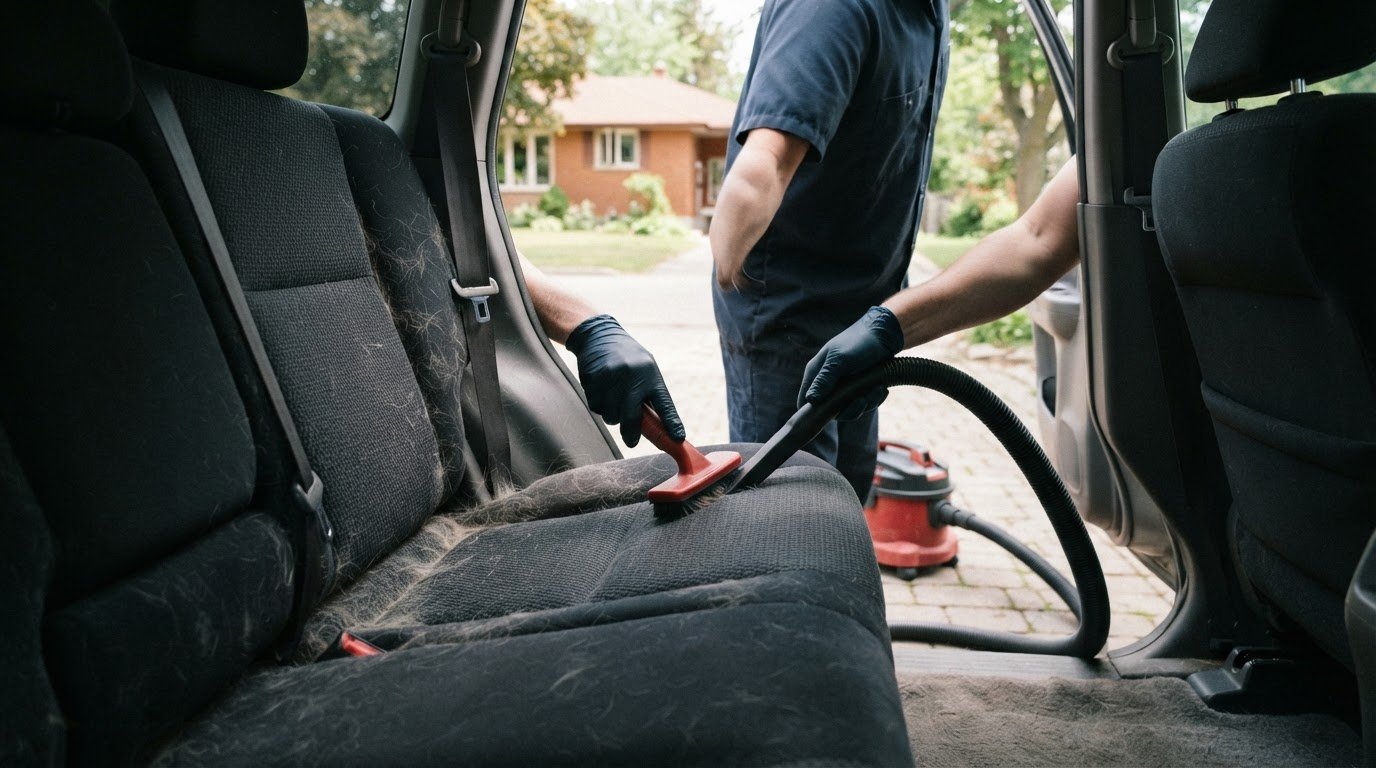
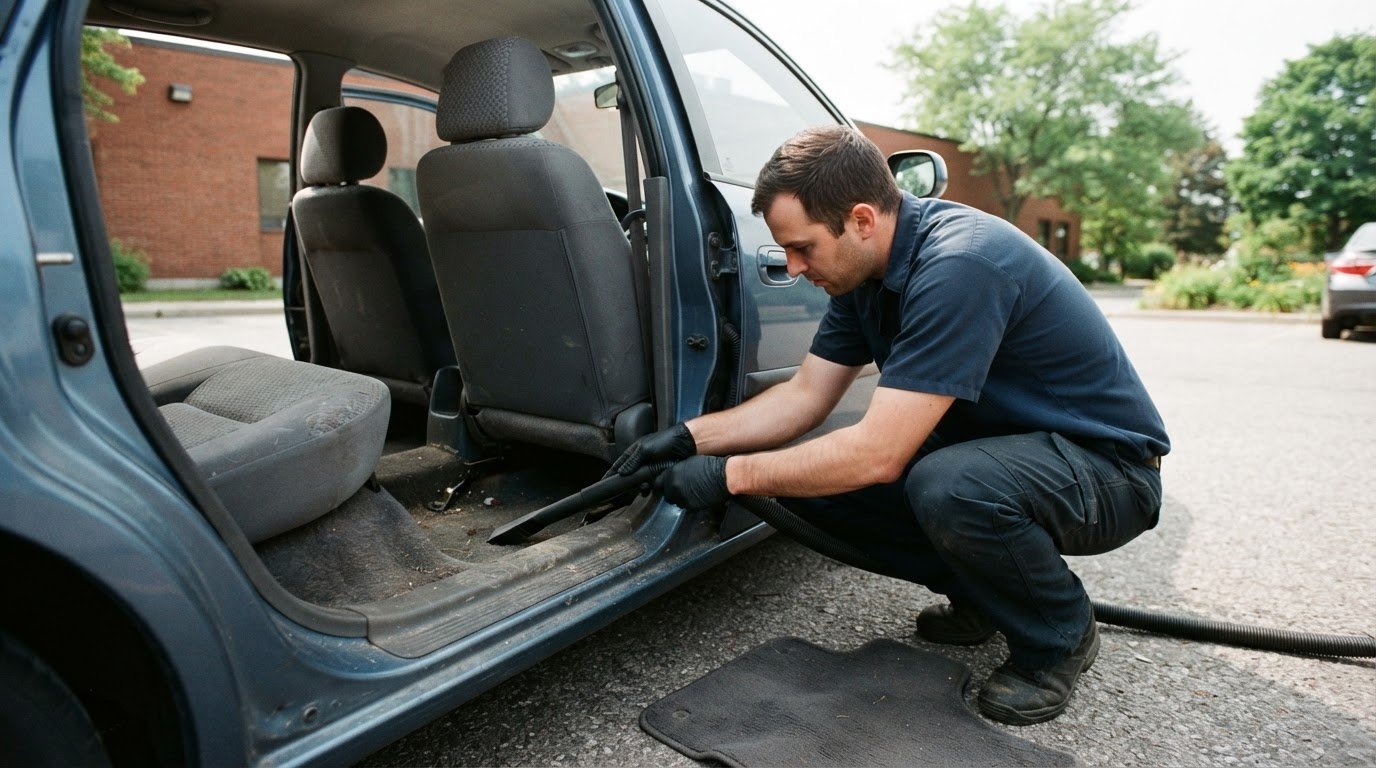
Extract loosened liquid and cleaner. Press a dry towel onto the area to lift moisture and dissolved residue. A wet-dry vacuum can extract excess moisture from cleaned car upholstery. Move its nozzle carefully over the affected section instead of holding it in one place. Extraction helps remove the cleaning solution along with the coffee, reducing residue that could remain in the fabric after drying.
Treat dried coffee stains
Soften the dried mark with warm water and mild detergent. Dampen a clean cloth with the solution and apply it to the stain without saturating the seat. Let it sit for a few minutes so the dried residue can loosen. Blot the area, then assess whether coffee transfers to the cloth. Avoid scraping hardened material, which can roughen fabric fibres or push particles into the weave.
Use targeted pre-treatment for a set stain. After 48 to 72 hours, a coffee stain may need targeted chemical pre-treatment. Follow the product directions and test it discreetly if the care instructions allow. Let the treatment work for five to ten minutes, then blot rather than rub. Don’t repeat applications rapidly; check the seat’s colour and texture between treatments.
Choose a controlled method for stubborn marks. A mixture of one part vinegar to two parts water can be applied to a fabric stain. Let it sit for a few minutes, gently work the mark with a soft-bristle brush, then blot. Avoid flooding seams or cushion edges. Extract excess moisture, and allow the cleaned fabric to dry fully before judging whether another treatment is needed.
Rinsing and drying car seats
Lift cleaning solution with a damp cloth. After the soapy solution has sat for a few minutes, wipe the treated fabric with a clean, damp cloth. Rinse the cloth often so you don’t transfer loosened coffee back onto the seat. Use a light mist or damp cloth, not a heavy pour. The aim is to remove cleaner and residue without soaking the cushion.
Use only a little clean water. Wipe the stain with a lightly damp cloth, then check whether soap still feels present on the fabric. Repeat with clean water as needed, keeping moisture within the original affected area. Avoid scrubbing during rinsing, since friction can disturb upholstery fibres. Excess water can travel into seams and the cushion beneath the surface.
Blot to absorb moisture. Press a clean, dry towel onto the rinsed area and lift it straight up. Shift to a dry section of towel as it absorbs water. Don’t rub back and forth, which may spread remaining residue or roughen the fabric. Repeat until the towel picks up less moisture, paying attention to seat seams and cushion edges.
Extract excess water when available. A wet-dry vacuum can remove moisture from cleaned car upholstery. Pass it carefully over the damp area, without holding the nozzle in one spot. Extraction helps draw out water that towel blotting may leave behind. Use the tool according to its instructions, and avoid applying extra water simply to make another pass.
Air-dry the seat thoroughly. Open the vehicle’s doors and windows to encourage air circulation. A fan can help move air across the damp fabric. Don’t use direct heat or sunlight to speed drying, especially on leather. For leather, remove soap residue with a clean, damp cloth, then let it air dry away from sunlight and heat.
Check the finish only after drying. A thoroughly dried seat is less likely to develop odour or water spots. Once dry, inspect the treated area and nearby seams under good light. If the mark remains, avoid repeated scrubbing or layering more cleaner onto the upholstery. For broader interior cleaning beyond one spot, book interior detailing as the next step.
Suds Detailing: Fleet Services
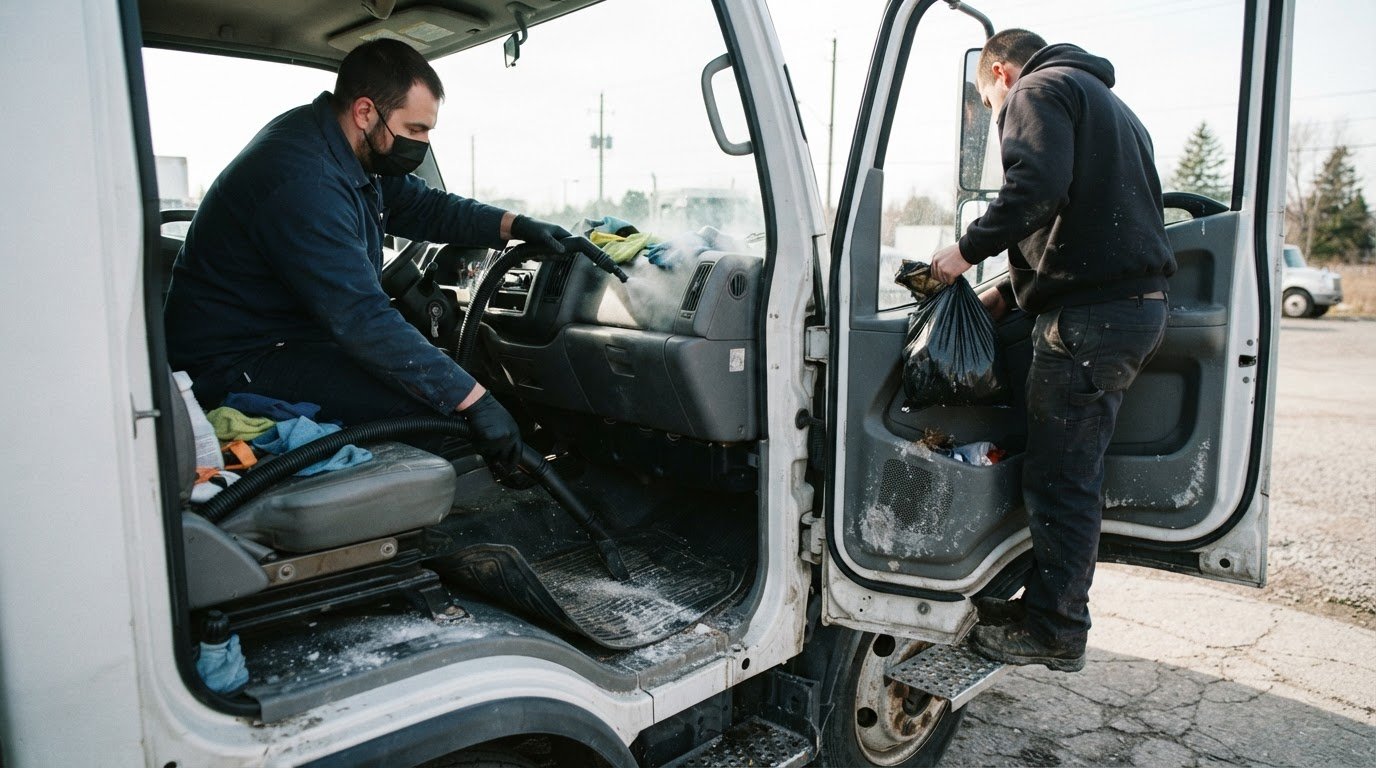
Suds Detailing provides mobile interior detailing for individual vehicles and Fleet Services for businesses. The Basic Interior Package and Full Interior Package include interior care, while the Basic In & Out Package and Full In & Out Package combine interior and exterior detailing. The Full Interior Package includes seat steam cleaning and stain removal.
Choose a package based on whether you need care for one seat or a broader cabin refresh. Suds Detailing’s interior packages include steam cleaning, and the Full Interior Package includes seat and carpet stain removal. Fleet Services support businesses maintaining multiple vehicles.
Contact Suds Detailing to discuss the interior care that fits your vehicle.
Keep your next drive cleaner
Coffee stain on car seat removal in Orangeville can be a useful prompt to prevent future spills, too. Consider whether a loose cup, a crowded console, or a missing cloth made the spill harder to manage. Keeping an absorbent cloth handy can help you blot a spill promptly.
If your vehicle needs attention beyond one coffee mark, choose interior care that matches its overall condition. Suds Detailing offers packages for individual vehicles and Fleet Services for businesses, with mobile detailing at your preferred location.
Ready to plan your next interior detail? Contact Suds Detailing today and take a considered step towards a cleaner cabin.
Frequently Asked Questions
Is it safe to scrub a coffee stain out of carpet?
Hard scrubbing can spread coffee and disturb carpet fibres, so begin with gentle blotting instead. If the mark remains, use a soft-bristle brush with light strokes on the stained patch. For example, avoid brushing across the full seat cushion when only one small area is marked. Stop if the carpet’s colour or texture changes, and remove cleaner residue with a lightly damp cloth.
What if I've already tried multiple DIY products on the stain?
Pause before applying another product. Write down what you used, in what order, and where you applied it. For example, note whether the stain received dish soap, vinegar, or a commercial remover. Overlapping residues can make the remaining coffee harder to assess. Blot excess moisture with a clean towel, then follow the vehicle’s upholstery care instructions before choosing another treatment.
Why does my coffee stain keep coming back after I clean it myself?
Coffee or cleaner residue may remain beneath the upholstery surface and become visible as the fabric dries. A seat can look clean while damp, then show a brown ring later. Use a small amount of rinse water, then blot or extract moisture thoroughly. Check the spot only after it has dried completely, since judging it while wet can hide remaining discolouration.
How to remove a fresh coffee stain from a car seat safely
Lift loose liquid with a clean, absorbent cloth, pressing and lifting rather than rubbing. Work from the edge of the mark towards the centre, using a dry section of cloth with each press. For fabric, follow the care instructions before applying a small amount of mild cleaning solution. Avoid pouring liquid directly onto the seat, especially near seams.
What mistakes can damage or discolour car seat upholstery during cleaning
An unsuitable cleaner, excess liquid, or stiff-brush scrubbing can damage upholstery. A concentrated product may leave residue or alter fabric’s appearance, and an untested solution may affect leather colour. Read the vehicle’s care instructions and test a leather cleaner on a hidden area first. Don’t combine household chemicals or repeat treatments without checking the material between attempts.
DIY car seat stain cleaning versus professional auto detailing
DIY cleaning may suit a small spill if you can follow the seat’s care instructions and control moisture. Professional detailing can help when a stain is set, several areas need attention, or home cleaning leaves residue. Suds Detailing’s Full Interior Package includes seat steam cleaning and stain removal, as well as carpet steam cleaning and stain removal. It’s a practical choice when the cabin needs more than spot treatment.
How much does professional car upholstery stain removal cost in Orangeville, Ontario
The phrase “coffee stain on car seat removal Orangeville” describes a search for local cleaning, but pricing depends on the case and is provided after a quote request. Stain count, age, and dairy or sugar residue affect the work involved. For example, one recent mark differs from several older stains. Describe the spill and any previous cleaning treatments when requesting a quote.
Which car detailing businesses in Orangeville remove coffee stains from seats
Suds Detailing offers mobile automotive detailing in Orangeville, including interior care for coffee-stained seats. Its Full Interior Package includes seat steam cleaning and stain removal, making it relevant when a coffee mark needs professional attention. People searching “coffee stain on car seat removal Orangeville” can consider this option for a seat stain or broader cabin care. Fleet Services are also available for business vehicles.
Comments