Road Salt Removal for Shelburne Fleet Vehicles

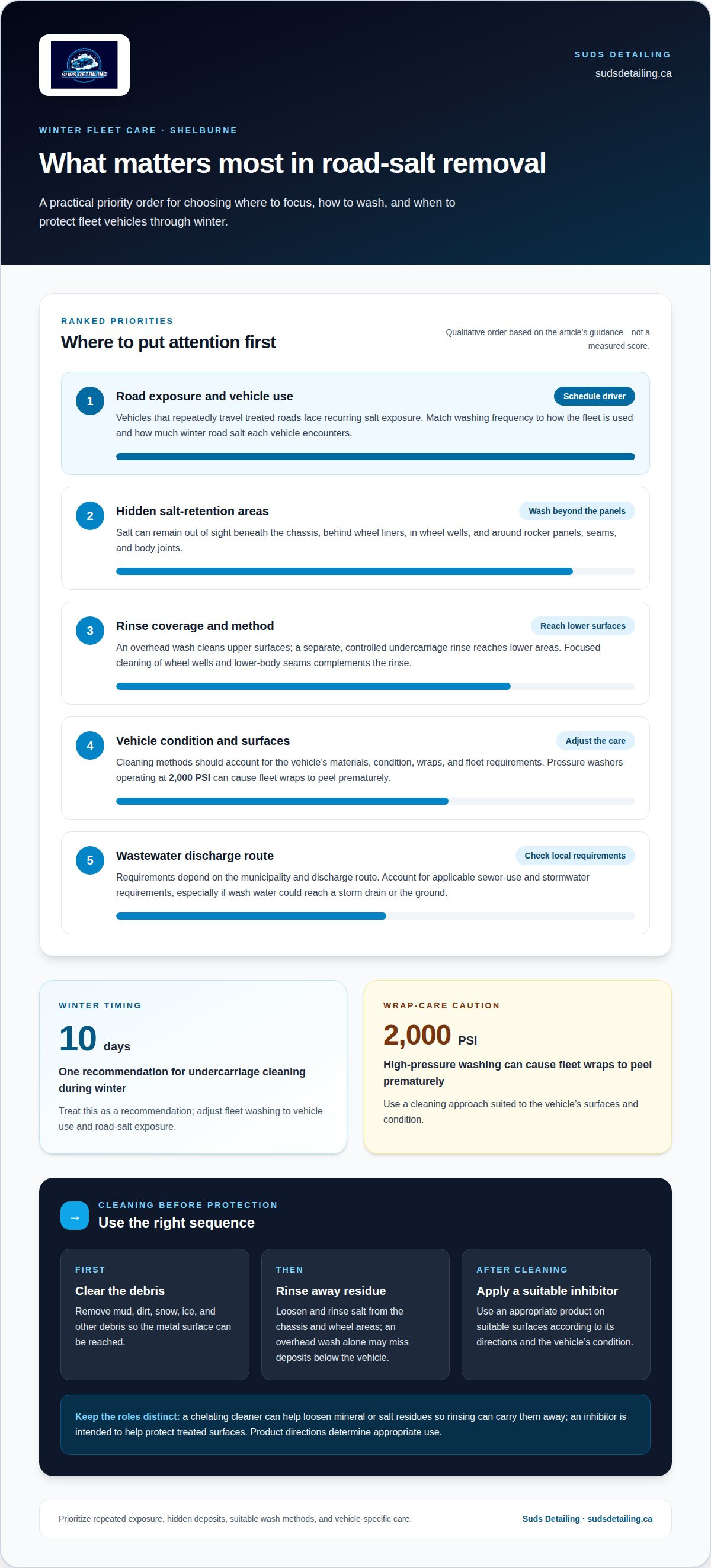
A clean exterior alone isn’t enough to protect a commercial fleet from winter salt. Road salt removal for fleet vehicles in Shelburne means paying attention to residue that collects around body seams and lower surfaces, where repeated exposure can contribute to corrosion. Regular cleaning helps remove salt buildup and keep fleet vehicles looking professional.
Keeping vehicles presentable matters, but regular cleaning also helps maintain their condition through winter use. A consistent detailing routine addresses salt and road grime before they build up.
This article explains how road salt affects fleet vehicles, how cleaning methods and corrosion inhibitors help limit salt-related damage, and what influences the right washing schedule. You’ll also learn what to expect from professional fleet detailing in Shelburne, from cleaning priorities to the details that help tailor the service to your vehicles and operating conditions.
Table of Contents
How Does Road Salt Damage a Vehicle?
For commercial vehicle washing in Ontario, wastewater handling depends on the municipality and discharge route. Fleet operators should account for applicable sewer-use and stormwater requirements, especially where wash water could reach a storm drain or the ground.
Salt damage often starts where road spray settles and stays. Undercarriages, wheel wells, rocker panels, seams, and other body joints can collect salty moisture after a drive. When water evaporates, salt residue remains. Fresh road spray can dampen it again, extending contact with metal and protective coatings.
The damage can be difficult to spot from a quick walk-around. A vehicle may look clean above the wheel line while deposits remain behind wheel liners or beneath the chassis. Over time, corrosion can affect exposed metal and components around the undercarriage. Fleet vehicles that travel treated roads repeatedly face recurring exposure, so washing needs to reach beyond visible body panels.
A thorough professional wash uses overhead spray for exterior surfaces and a separate undercarriage application for lower areas. The overhead pass removes salt from the body, glass, and upper wheel arches. A directed rinse beneath the vehicle reaches chassis surfaces that ordinary exterior washing misses. The sequence matters: loosening and rinsing away deposits helps prevent salt from being left in seams or redistributed across clean panels.
Wheel wells need focused attention because they collect spray, grit, and slush thrown up by tires. Professional washing can target these areas and the lower body without treating every surface as if it needs identical pressure. That care matters for fleet vehicles with wraps: pressure washers operating at 2,000 PSI can cause fleet wraps to peel prematurely.
For undercarriage salt removal, the best professional method is a controlled rinse directed across the underside, followed by careful cleaning of wheel wells and lower-body seams. Professional hand-washing complements that rinse by addressing reachable part junctures and visible residue. A single overhead wash alone won’t reach every deposit tucked below the vehicle.
Winter frequency should reflect road exposure and vehicle use. One recommendation is to clean the undercarriage once every 10 days during winter to help prevent salt buildup and corrosion. For a fleet, a professional process can prioritize vehicles with frequent exposure and include the undercarriage, wheel wells, and lower body in each relevant wash.
Requirements depend on the municipality and wastewater discharge route. Commercial operators should account for applicable sewer-use and stormwater requirements, particularly when wash water could reach a storm drain or the ground.
Salt removal and corrosion inhibitors
Road salt can accelerate corrosion when salty moisture remains on metal, paint chips, and seams. On a fleet vehicle, repeated winter exposure may leave residue beneath the chassis, around wheel wells, and along lower body panels. Removing deposits is the first step; applying an inhibitor over dirt or salt can leave the underlying contaminant in place.
A professional process begins with surface preparation. Mud, dirt, snow, ice, and other debris should be cleared so a corrosion inhibitor can reach the metal. This sequence matters because a coating applied over packed grime may not make even contact with the surface it is intended to protect. Cleaning first also makes remaining visible deposits easier to identify.
Some products use chelation, in which an ingredient binds with metal ions. In vehicle cleaning, a chelating cleaner can help loosen mineral or salt residues so rinsing can carry them away. Chelation is not the same as an inhibitor: one supports contaminant removal, while an inhibitor is intended to help protect treated surfaces. Product directions determine appropriate use.
For undercarriage corrosion protection, washing should reach exposed metal and areas where deposits collect, rather than stopping at exterior panels. A controlled rinse removes loosened residue from the chassis and wheel areas. After cleaning, an appropriate inhibitor can be applied to suitable surfaces according to its instructions. The vehicle’s materials and condition matter, since coatings and components can have different care requirements.
Paint care starts with removing salt from the finish. Residue can dull paint and contribute to deterioration where the finish is already chipped or damaged. Regular washing helps keep fleet vehicles clean and safety markings visible. Clean surfaces can also make it easier for staff to notice visible damage or leaks during routine checks.
What are the risks of road salt corrosion for fleet vehicles, and what do prevention costs involve? Corrosion can damage metal components and finishes, while prompt washing and suitable inhibitors help limit salt exposure. Prevention and repair costs depend on fleet size, vehicle condition, cleaning scope, and treatment needs; pricing is provided after a quote request.
For fleet planning, match cleaning and inhibitor application to vehicle exposure and condition. Vehicles travelling treated roads repeatedly need attention to areas that retain residue, while a vehicle with existing paint damage may require a different care approach. A professional fleet washing appointment can address salt removal as part of ongoing winter vehicle care.
That scale of exposure makes preventive maintenance relevant beyond appearance: AAA estimates that road salt causes over $3 billion in vehicle damage annually in the United States. These figures give fleet managers another reason to include salt removal and appropriate inhibitor use in maintenance planning. Attention can be directed to vehicles with repeated exposure and to areas where residue collects, while treatment should still follow product instructions and account for vehicle condition. Pairing cleaning with inspection can help teams identify visible damage and determine which surfaces need further attention.
Commercial, industrial and municipal fleet cleaning
Commercial, industrial, and municipal fleets have different cleaning priorities. A delivery van travelling Shelburne streets may collect winter residue on its lower panels, while a work truck may also pick up job-site dirt around its wheels. Municipal vehicles may move between treated roads and unpaved shoulders. A useful plan considers vehicle use, operating conditions, and exposure to road spray.
Fleet cleaning frequency depends on operating conditions and exposure. Vehicles regularly travelling on salted roads may need more frequent attention than those used mainly on cleared routes. Consider weekly washing during heavy winter months, then adjust the schedule to the fleet’s work and exposure. A route-based plan can prioritize vehicles returning from treated roads.
A maintenance schedule helps keep cleaning consistent. Fleet managers can group vehicles by type, route, and condition, then plan service around operating cycles. For example, a municipal truck working treated roads may need more regular attention than a van used mainly for local deliveries. Revisit priorities as winter conditions and vehicle use change.
Wheel wells and frame rails deserve explicit attention in fleet work. Tires throw slush into wheel housings, while road spray can settle along the frame rails beneath trucks and vans. A professional wash should direct attention to these areas, then rinse away loosened residue. The vehicle’s design and access points help determine how the cleaning is carried out.
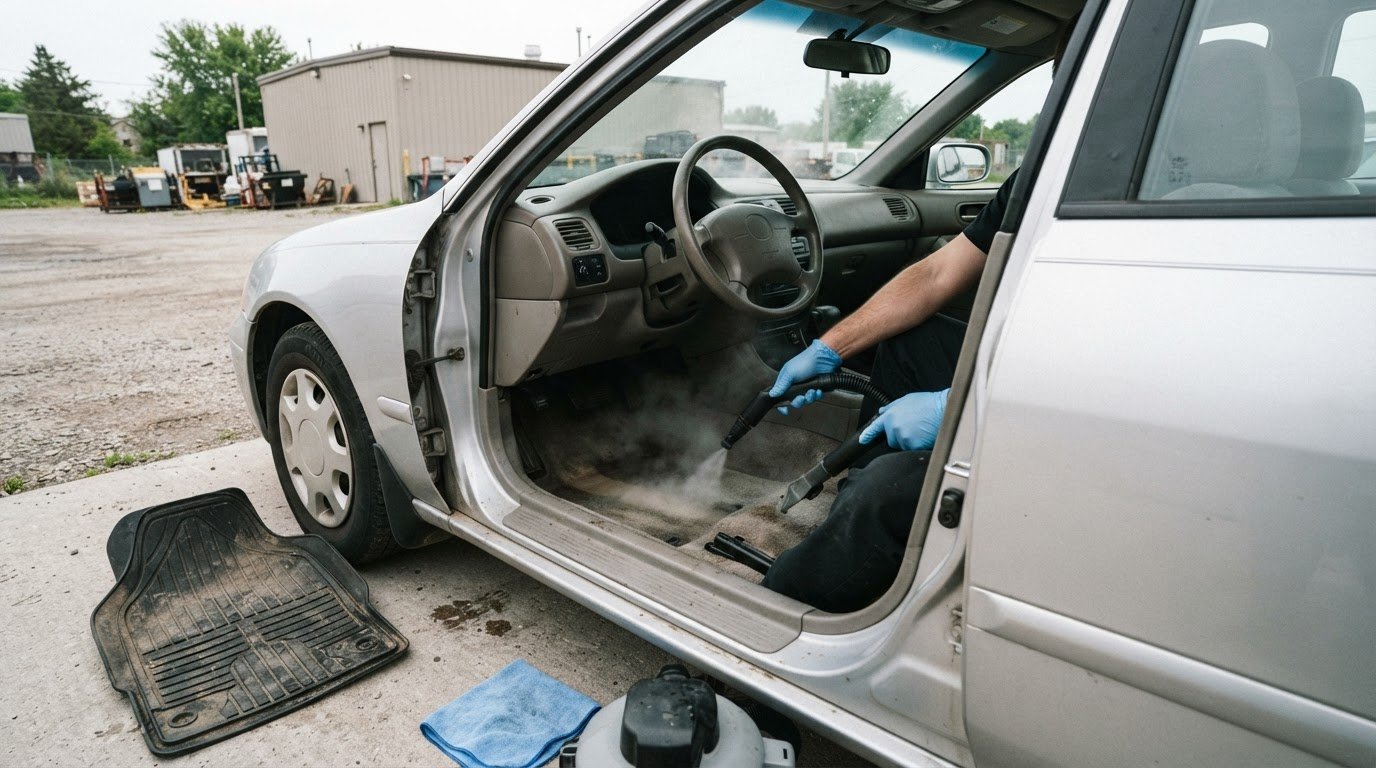
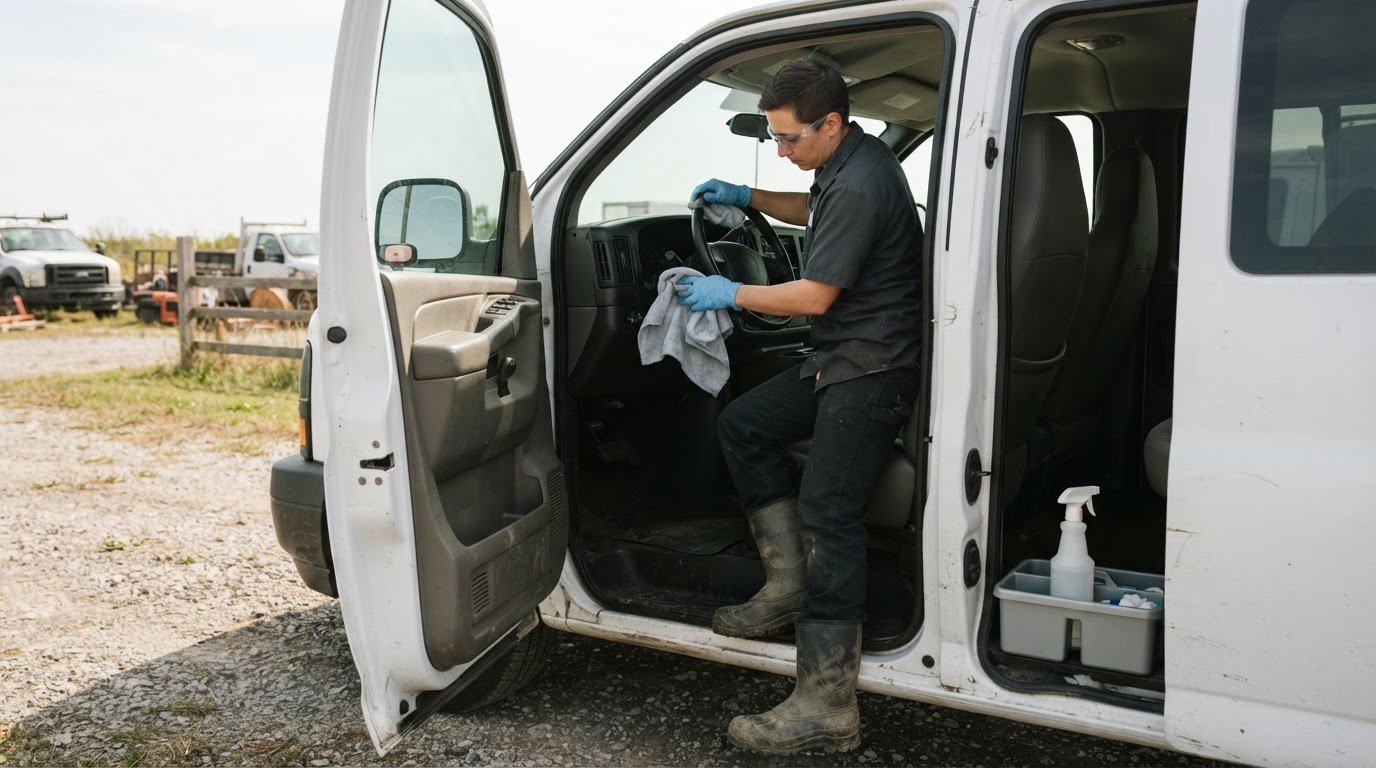
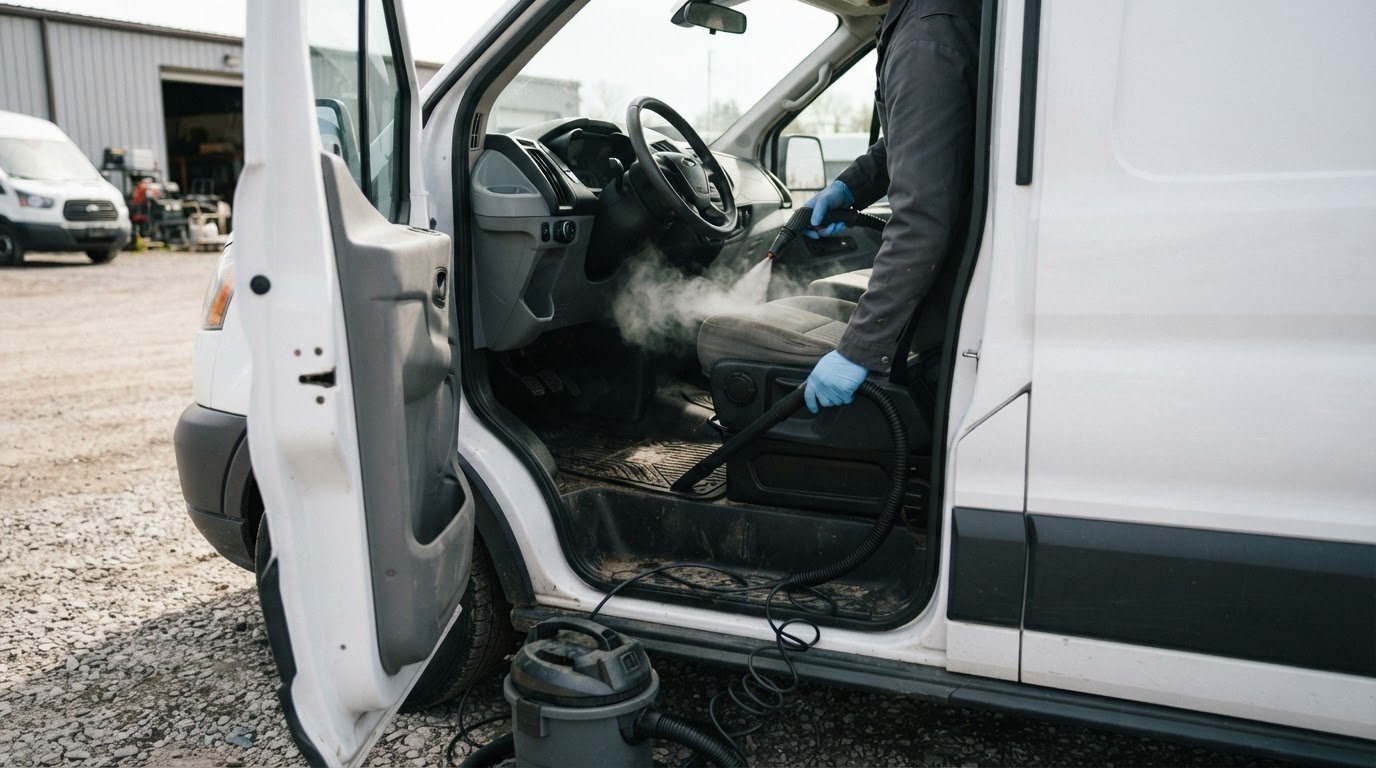
Cabin care is another practical part of fleet upkeep. Drivers can bring in wet footwear, road grit, and winter debris that accumulate on mats and carpets. Suds Detailing’s Basic Interior Package includes steam cleaning of floor mats and vacuuming of seats and carpets. The Full Interior Package adds seat and carpet steam cleaning and stain removal, plus vinyl protectant and leather treatment and protectant.
For commercial vehicle detailing near Shelburne, choose a service that fits the fleet’s vehicle types, winter exposure, and interior needs. Suds Detailing provides mobile Fleet Services, bringing detailing to your preferred location. Its service area includes Shelburne, Grand Valley, Caledon, Orangeville, Erin, Mono, Arthur, Guelph, Fergus, Georgetown, and Dundalk.
Fleet wash discounts and service plans in Shelburne and Dufferin County should be evaluated against the actual work required. Cost depends on fleet size, vehicle condition, cleaning scope, and frequency, with pricing provided after a quote request. A clear plan identifies which vehicles need regular washing and whether cabin cleaning is part of the schedule.
Professional application methods and equipment
Professional salt removal means matching the cleaning method to the vehicle’s surfaces. Suds Detailing provides mobile detailing with hand washing and steam cleaning as specified in its packages. Its Full In & Out Package includes a pre-wash, hand washing of rims and tires, and bug removal. Package features make it easier to choose the level of care that fits each vehicle.
Pressure matters. Fleet wraps can peel prematurely when pressure washers operate at 2,000 PSI, so a careful operator adjusts the method around wrapped panels and edges. A focused rinse can reach lower bodywork, while controlled hand-washing helps clean around trim, door seams, and other detailed areas. The right approach depends on the vehicle’s finish and the location of the salt.
Undercarriage cleaning calls for equipment that can direct water beneath the vehicle. A technician can work systematically across accessible underside surfaces, including areas near wheel housings and frame components. This targeted application differs from washing only the roof, windows, and exterior panels. For a fleet truck with visible winter residue beneath its body, the underside needs deliberate attention rather than a quick exterior pass.
Before any corrosion inhibitor is applied, mud, dirt, snow, ice, and other debris should be removed. Clearing these materials helps the product reach metal instead of sitting on top of packed contamination. The operator then follows the product’s application directions and focuses on the intended surfaces. This preparation step is especially relevant for trucks returning from slushy roads or unpaved worksites.
Mobile fleet washing and a commercial truck wash each suit different operating needs. Mobile service brings cleaning to the fleet’s location, which can reduce vehicle travel to a wash site. A commercial wash facility provides a dedicated wash-through setting. For either option, salt removal quality depends on whether the process reaches the undercarriage, wheel areas, and lower panels, not simply on the equipment’s location.
Equipment selection should also account for fleet size and vehicle variation. A mixed group of vans, pickup trucks, and larger commercial vehicles may require different access, rinse angles, and attention to finishes. A consistent process can identify each vehicle’s cleaning priorities before washing begins. Operators can then use a suitable combination of controlled rinsing and hand-cleaning, rather than applying one forceful technique to every surface.
After washing, a visual review can identify remaining buildup around accessible seams, wheel areas, and lower panels. That final pass helps catch spots missed during the initial rinse. During Shelburne’s heavy winter months, recurring cleaning is useful for fleets exposed to salt, while the exact process should reflect route conditions and vehicle materials.
Fleet and commercial vehicle salt removal
Professional fleet care in Shelburne should reflect vehicle use, road exposure, and finish type. A delivery van, municipal truck, and industrial vehicle can collect residue in different places. Vehicles travelling treated roads or carrying winter slush need regular attention to lower body panels and wheel areas. A consistent process also makes visible residue easier to spot.
During heavy winter months, consider weekly fleet washing for vehicles exposed to road salt. The right frequency still depends on operating conditions and exposure. A vehicle travelling untreated roads may need a different schedule from one making repeated trips on treated routes. Group vehicles by route and use, then plan cleaning around their availability.
Salt removal should address more than the parts visible from the roadside. A professional wash can include exterior panels, lower bodywork, wheel areas, and accessible undercarriage surfaces. The cleaning method should suit the vehicle’s finish, including wraps and other delicate surfaces. One drive-through fleet showed visible salt staining on its rockers and dulling on its wrap after six weeks of winter exposure.
For a mixed fleet, a clear service plan can distinguish priorities without treating each vehicle identically. A van returning from local deliveries may need attention to its lower panels and cabin, while a work truck may collect additional debris around its frame and wheel areas. Recording vehicle type, route, finish, and cleaning needs helps keep the process organized across successive washes.
Salt removal services for fleet vehicles in Shelburne, Ontario, should account for both the fleet’s work and the areas exposed during travel. A professional cleaning process can help protect paint, reduce corrosion, keep safety markings visible, and make inspections and maintenance easier. These benefits rely on a wash that reaches relevant surfaces, not simply one that improves the vehicle’s appearance.
Operational planning matters too. Coordinating vehicle groups around route schedules can reduce disruption, while prioritizing the most salt-exposed vehicles keeps the plan responsive to winter conditions. After frequent travel on treated roads, for example, bring those vehicles forward for cleaning. Adjust the schedule as use and exposure change.
For a tailored approach to professional fleet washing, arrange service around your vehicles’ routes, finishes, and winter cleaning priorities.
For a tailored approach to professional fleet washing, water use is another consideration when comparing cleaning options. An average commercial car wash uses about 40 gallons of water to wash one car. This gives fleet managers a stated point of comparison when considering how vehicles are cleaned.
After 4 minutes of hosing down a vehicle, a person uses more water than a typical commercial car wash needs to finish washing one car. That comparison places home hose use alongside commercial washing when planning a fleet service.
Thirty minutes of washing a vehicle at home uses enough water to wash it seven times at a typical commercial car wash. Taken together, these figures offer a simple way to discuss water use as part of a fleet’s cleaning approach, alongside route exposure, vehicle availability, and finish needs.
Suds Detailing: Fleet Services
Suds Detailing provides Fleet Services for commercial operators in Shelburne and surrounding communities. Its mobile detailing helps businesses arrange vehicle care at their preferred location. For cabin care, Suds Detailing also offers interior packages with steam cleaning, vacuuming, and other listed services.
For individual vehicles, the Basic In & Out Package and Full In & Out Package combine interior and exterior detailing. The Basic Interior Package and Full Interior Package focus on cabin care. Choose the package that fits the vehicle’s condition and the cleaning required.
For professional fleet care, contact Suds Detailing to discuss your vehicles’ cleaning needs.
Set a Clear Winter Care Plan
Make winter vehicle care part of fleet planning rather than a last-minute response to visible residue. A practical next step is to identify which vehicles travel salt-treated roads most often, then build cleaning into their operating schedule. Keep the plan flexible as routes and conditions change. This gives road salt removal for fleet vehicles in Shelburne a clear place in routine fleet maintenance, instead of leaving each wash to chance.
Consider how each vehicle is used, which finishes need careful handling, and whether cabin cleaning also matters. Sharing those priorities with a professional helps shape a service approach around the fleet’s actual work. Clear priorities also make it easier to maintain consistent care across different vehicle types without interrupting essential operations.
Contact Suds Detailing about fleet cleaning to discuss a suitable next step for your vehicles. A considered plan can help keep winter care manageable and your fleet ready for the work ahead.
Frequently Asked Questions
How Much Does Salt Removal Cost?
Salt removal costs depend on the vehicle’s size, condition, and cleaning scope. A fleet vehicle needing exterior washing alone differs from one requiring careful attention to its finish and interior. Fleet size and cleaning frequency also shape the work involved. For an accurate service price, request a quote with details about the vehicles and the cleaning required; pricing is provided after a quote request.
How often should fleets wash vehicles to prevent winter salt corrosion in Ontario?
During heavy winter months, consider weekly washing for fleets exposed to road salt. Adjust the schedule to each vehicle’s routes and operating conditions. Vehicles making frequent trips on treated roads may need more regular cleaning than those used occasionally. Reviewing exposure as routes change helps keep the plan aligned with winter work.
Comments